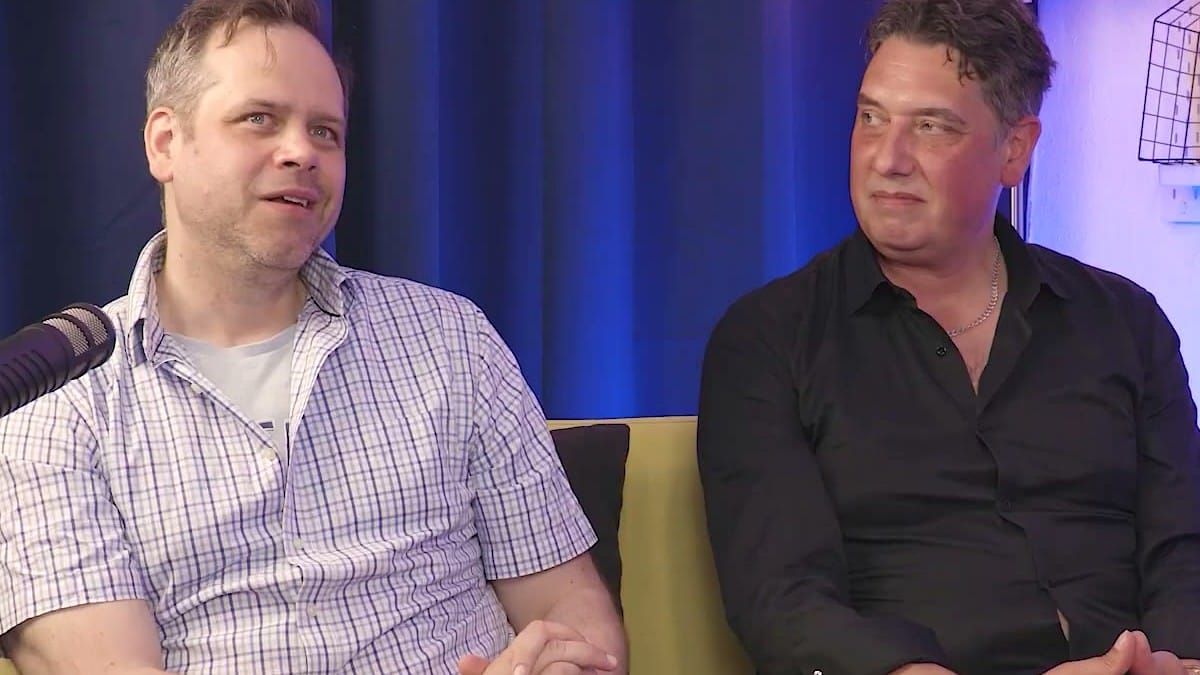
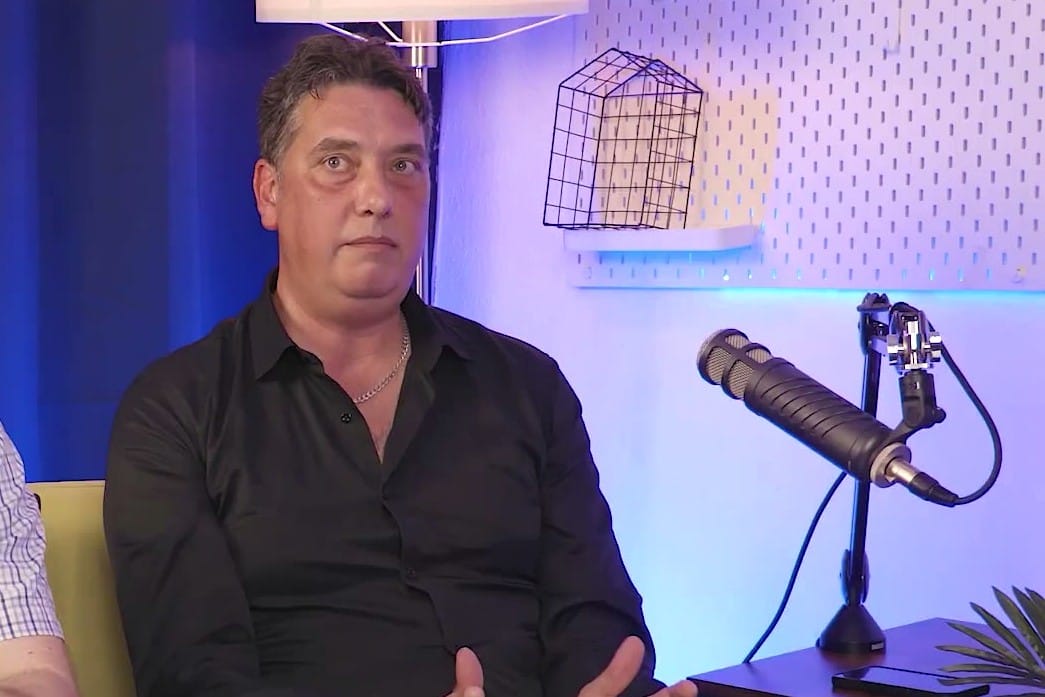
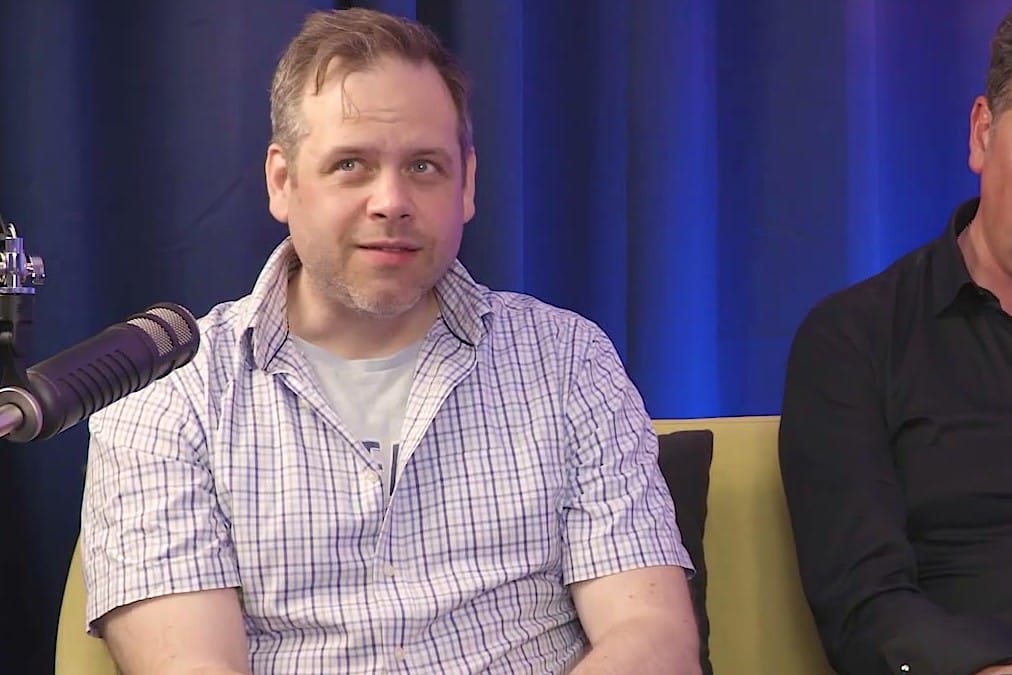
Episode one of the Affinity Podcast - a show I co-produced for FINN Partners, hosted by Aleksandra King - put me in a studio with Paul Waagbo, Head of Customer Data and Digital Marketing at Wagamama, to talk about the subject I've spent my whole career circling from both sides: the human side of data-driven marketing.
TL;DR
- Data-driven marketing sits at the intersection of two skill sets - the technical and the creative - and my first career, ten to fifteen years as a programmer, is exactly why I feel at home there.
- Paul Waagbo showed what a fair data trade looks like when it's done properly: give Wagamama your email and you get back a "data story of your year", offers you actually want, and increasingly a segment-of-one experience.
- AI is rewiring the plumbing of marketing - Paul joked that the human is now the API between AI systems - and the winners will be the brands that connect those systems without ever gambling with customer data.
- The identity layer the internet never had is arriving anyway, and the unsolved question is who arbitrates it - because nobody is comfortable with any of the current candidates.
- The bigger lesson: long-form interview thought leadership - podcasts and long-form video conversations - is the most relevant marketing there is right now, and the best way for any organisation to stay ahead of the game in an AI world (this episode included).
Why did my first career as a programmer matter here?
I'm a Managing Partner at FINN Partners and an AI visibility expert, based in our London office, heading our European integrated marketing teams - which means my weeks are mostly business development, client relationships and strategy. But that's not where I started, and it's not what shaped how I think. As I said on air: "I started up life as a … programmer, very very technical, you know, totally focused programmer and that was what I did for the first ten fifteen years of my career."
That history is the honest answer to what sparked my interest in this field. Marketing gave me the brand side - the craft, the creativity, the psychology - and programming gave me the systems side, the instinct to ask how the machine actually works underneath. As I put it on the show: "data driven marketing sits at the intersection between I think those two skill sets." That intersection isn't a niche any more - it's where the whole discipline is heading, because every meaningful marketing decision now has a data pipeline behind it, a feedback loop inside it, and a technology choice underneath it. If you can read both languages - the brand's and the machine's - you can translate between the people who own the story and the people who build the systems, and that translation is where the value gets created.
What does a restaurant chain teach an agency about first-party data?
A great deal, when the person running the data is Paul Waagbo. Paul is the kind of guest a marketer hopes to share a studio with - sharp on the detail, generous with the examples, and completely unsentimental about what the numbers actually say.
His signature move is the annual personalised email that Wagamama sends its guests: "I call that data story of your year with the brand" - plus your favourite food category, how many times you visited, and the dishes you'd probably love next, predicted from what you've already ordered. Nobody resents that email, because it's an honest trade - data handed over in exchange for an experience that's visibly, personally better.
And Paul is clear about where the trade is heading: "The biggest opportunity I think for us is to build that segment of one relationship where you feel that the brand know you so well that everything you receive is brilliant." That's the standard now - not segments of thousands, but a relationship of one, earned through first-party data and repaid in relevance.
Two findings from the episode stayed with me. Tap water orders were rising across the estate - read in the conversation as a quiet cost-of-living signal hiding in the transaction data - and there's a segment of guests who treat a visit like tapas, ordering sides to share rather than mains. Neither insight came from a survey; both came from the data a restaurant already holds, once someone curious enough looks at it properly.
I'll also admit to enjoying one moment more than I probably should have. Unprompted, Paul gave our FINN search team a testimonial: "our superstar dish, chicken katsu curry, was on page seven of Google. I think ranked seventy-fifth or something. It's ridiculous." Six to nine months of specialist work later, it was hovering around spot one. I still enjoy hearing that story - partly for the result, mostly because it shows what happens when a client and an agency trust each other enough to work as one team.
Where is the human in a world of AI systems?
Paul is admirably careful here, and his discipline is worth copying: "I say rule of thumb, if I were to use AI for something just in my day to day job, I would never use an AI tool on data that's not public already." That doesn't mean abstinence - Wagamama runs AI inside its own customer data tool, spotting dish affinities and predicting which guests are drifting towards lapsing - it means never putting customer data anywhere you can't guarantee it stays protected.
Then he delivered the line of the episode: "I joked a couple of weeks ago that we have become the API. The human is now the API between the two … AI systems". It's funny because it's true - two AI tools that can't yet talk to each other directly, with a person ferrying outputs between them. He also told a story about two neighbours, good friends, who each hand their email to an AI assistant - and from that day forward each is effectively doing search optimisation to reach the other, their friendship managed by a pair of gatekeepers. It's a joke with a serious edge, because those gatekeepers are coming to every inbox, every feed and every buying decision.
My own take is the optimistic side of the same coin. AI can connect disparate systems intelligently, and that's a really big opportunity - for marketing and well beyond it. If we get the assistant some technology providers are promising - "a really really intelligent personal assistant that actually understands me and Paul's personal assistant will understand him and the nuance of him" - something far beyond today's Alexa and Siri - then ultra-personalisation finally becomes real: experiences curated for you, without you having to drive every choice yourself.
Underneath it all sits the unresolved question: identity. The internet was never built with an identity layer, and one is arriving anyway - where a cookie used to stand in for you, your email address increasingly does. A single identity for the internet needs an arbitrator, and every candidate makes people uneasy - a government, the EU, one of the platforms. I don't think anybody is comfortable with any of those answers yet, and that discomfort will shape the next decade of digital marketing more than any single tool will.
One warning from the conversation deserves to hang above every personalisation roadmap: personalise too far and you're not a brand any more. A brand is a shared idea - and if every customer sees a completely different version of you, the uniqueness that made people care quietly dissolves.
Why is a recorded hour of conversation the most relevant marketing there is?
Here's the belief I keep coming back to, and this episode strengthened it: long-form interview thought leadership - podcasts, long-form video conversations, two practitioners thinking out loud - is the most relevant marketing there is right now, and the best way for organisations to stay ahead of the game in an AI world - a case I also made on Talk Radio Europe.
Most organisations still treat a recorded conversation as a nice-to-have - a brand garnish, first against the wall when budgets tighten. I'd argue the exact reverse, and for a structural reason. Consider what AI systems increasingly reward: content that is verifiably human. A recorded hour of two people reasoning, disagreeing, reaching for metaphors - the Muppet Show balcony, the mechanic who comes to your house - can't be cheaply faked, can't be spun up by a content farm, and carries its own provenance in every frame. When AI gatekeepers of the kind Paul described start deciding what reaches us, the material that gets through will be the material with demonstrable human authority behind it. Long-form conversation builds brand equity, it compounds through clips, articles and re-marketing, and it gives both people and machines something real to index - which is exactly why we made Affinity, and exactly why I'm writing about it now (just like this).
Where can you listen?
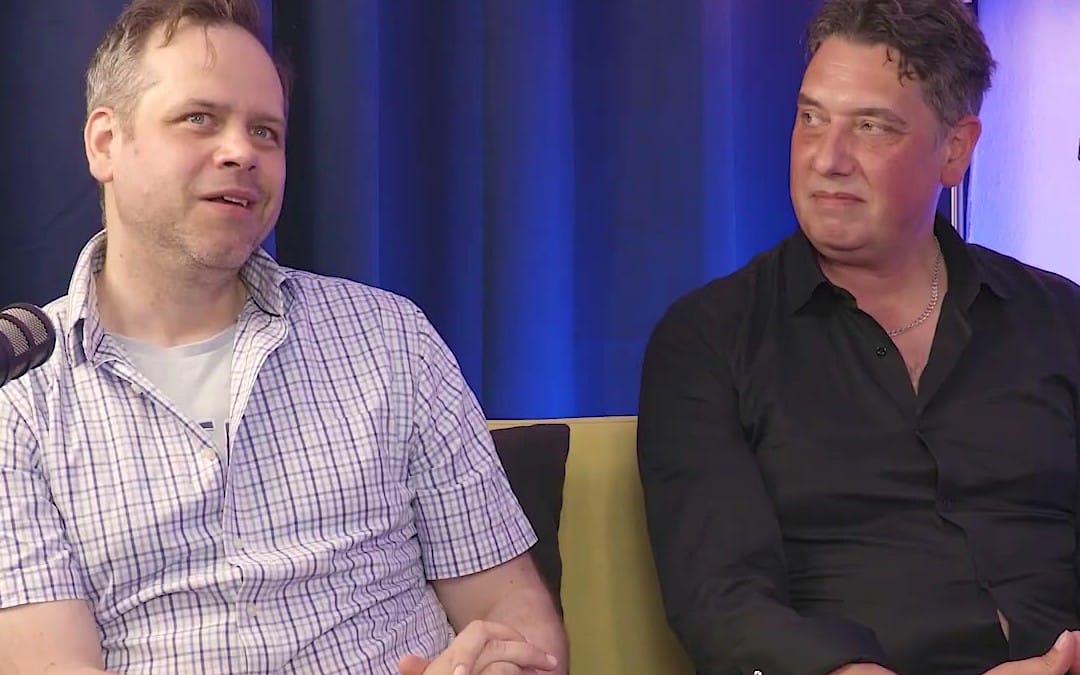
The full episode, "The Human Side of Data-Driven Marketing", is on the FINN Partners YouTube channel: watch it here. Aleksandra King, a podcast host in her own right, hosts - she and I also co-wrote Marketing Wins, so the questions come from someone who has mapped this territory herself - as host, as author and as marketer. If data-driven marketing is anywhere on your roadmap, it's an hour well spent - and Paul's metaphors alone are worth the click. I've also written about what it is like from the guest's side of the microphone, and if you'd like to talk any of this through, my door's open.
Frequently asked questions
Who appears on episode one of the Affinity Podcast?
Aleksandra King hosts. Her guests are Elliott King, Managing Partner at FINN Partners in London, heading the agency's European integrated marketing teams, and Paul Waagbo, Head of Customer Data and Digital Marketing at Wagamama. The show is a FINN Partners production.
What is a "segment of one"?
Paul Waagbo's term for the end state of personalisation: a relationship in which the brand knows a customer so well that everything the customer receives feels made for them. It's built on first-party data, a fair value exchange, and the restraint not to push what the customer doesn't want.
Why does long-form podcast content matter in an AI world?
Because AI systems value verifiably human content, and a recorded hour of practitioners thinking out loud is about as verifiably human as content gets. It builds authority with your customers, your prospects and your peers - and it keeps working long after the recording light goes off, through clips, articles and re-marketing.