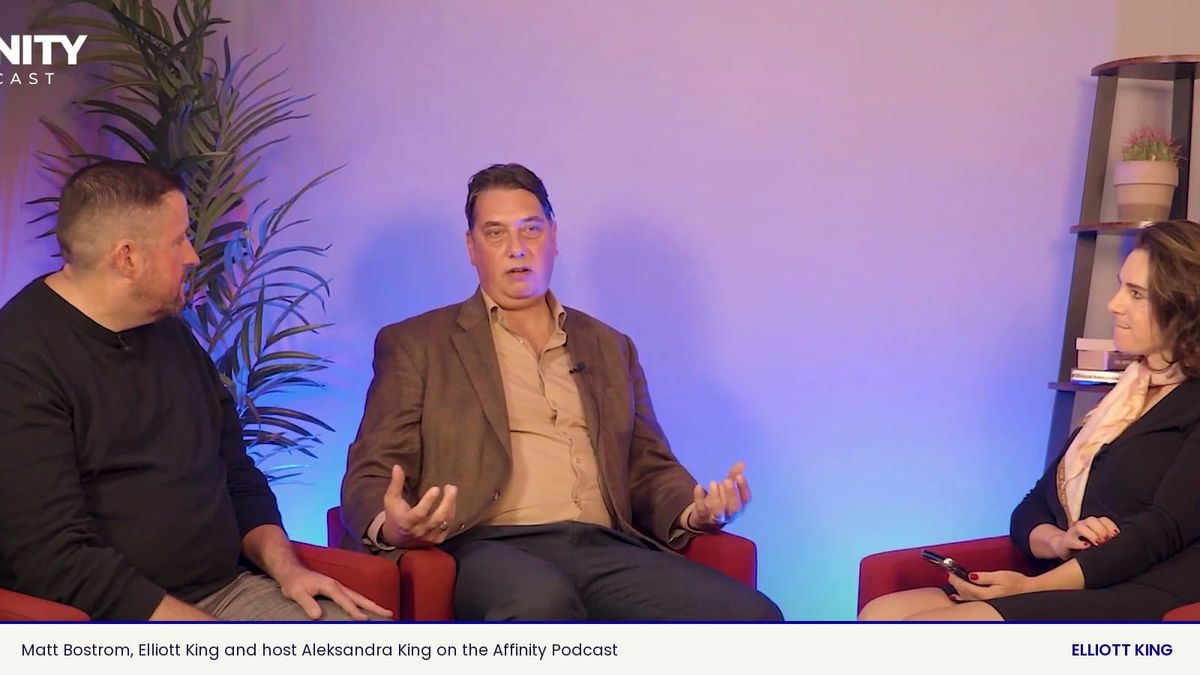
What I learned about global marketing, and the value of thought leadership production, when I joined colleagues to discuss strategies for globally integrated marketing.
By Elliott King
Published 19 July 2026 · Last updated 19 July 2026
How does it feel to be a ‘guest’ on your organisation’s own podcast production?
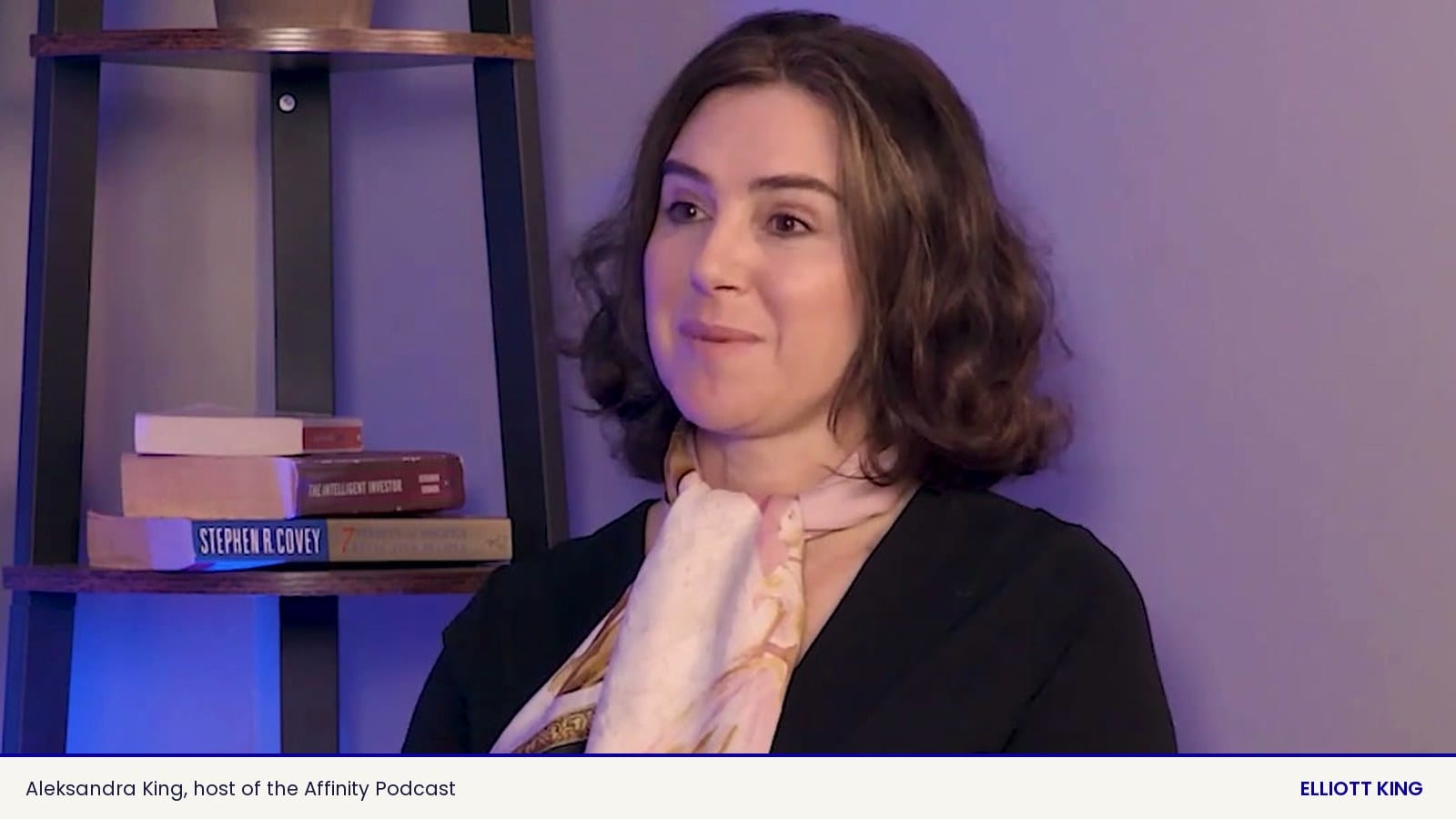
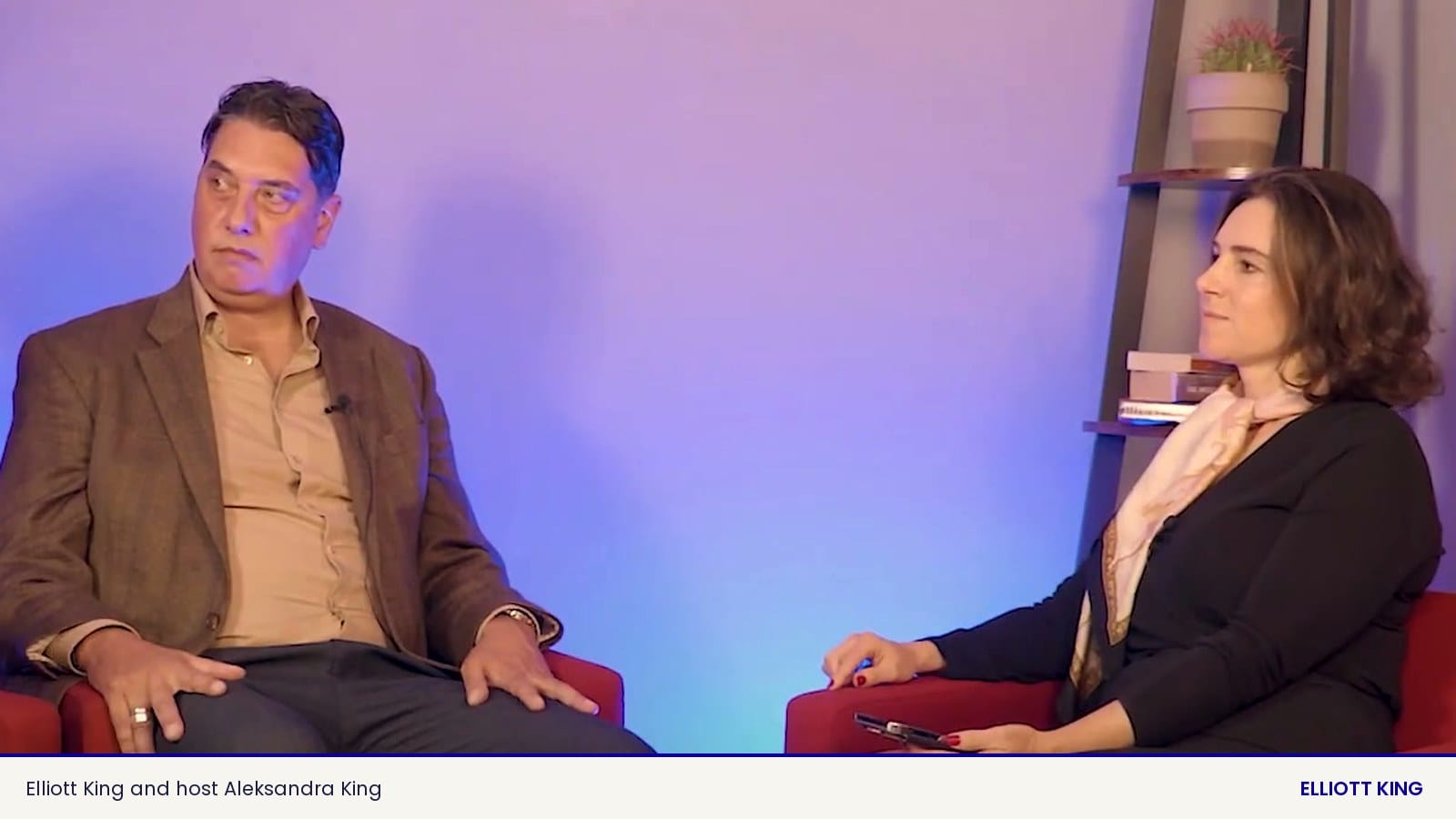
The Affinity Podcast is a FINN Partners production I co-produce, hosted by Aleksandra King. For episode three the guest chairs went to Matt Bostrom, Managing Partner in FINN Partners' Global Integrated Marketing Division, and to me. Which meant being interviewed, on the record, by my own wife.
Aleksandra is a guest host on ‘Affinity’, although she’s a podcast host with her own podcast interview show and her own studio, and this episode was recorded in it. Producing a show and sitting in it are not the same job, and I can report that the chair feels entirely different when the red light is for you.
Matt made it easier. We are Managing Partners within FINN’s Integrated Marketing division, I’m based in EMEA and report to him in the USA, and he is also a close friend. When Aleksandra opened by listing his career, the government work, the huge consumer brands, the two hundred awards his teams have won, he waved it off with genuine grace. That set the tone: two people who normally present with polish, being asked to just talk.
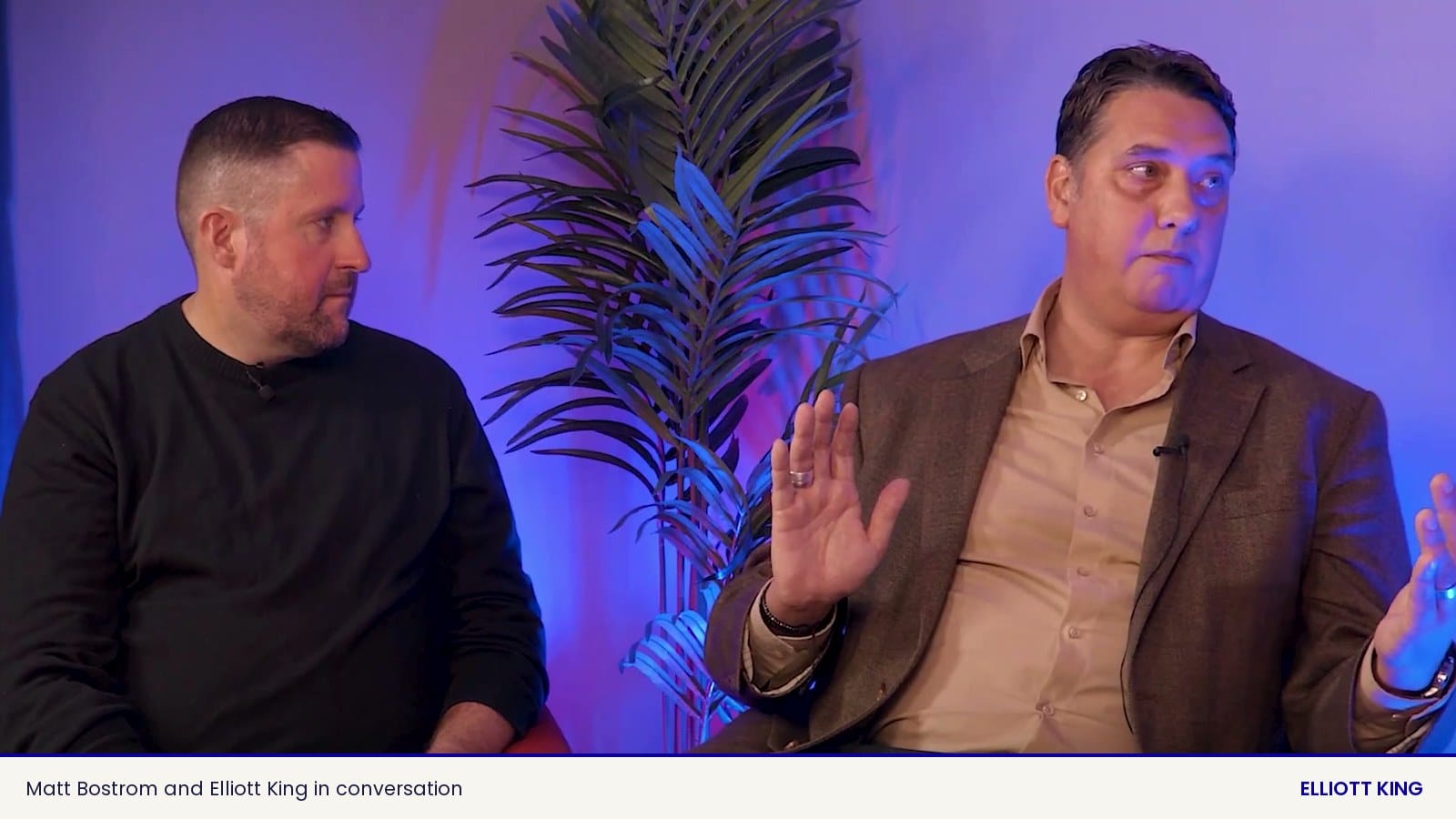
What does a global footprint actually mean?
Almost nothing, on its own. Any network can colour in a map. The question that matters is whether anyone in those markets genuinely knows the audience. The episode kept circling one distinction: claiming coverage is easy, reaching people is the actual job.
Matt put it best when he talked about what technology has and has not changed. Tools make it easier to claim scale, he said, and then came the line I have been repeating since: easier to claim "the ability to work globally, but that's still really different than reaching people".
He went further on why local knowledge is not optional: "the actual culture of people is really important because that's how any sort of company or brand's going to connect". This is the part I kept returning to on the episode. Going into the UAE, you do the bonding and rapport first and wait until the person across from you is ready to start business; in parts of Western Europe and the US, almost the opposite is true. The strategy is not wrong in either place, the room simply reads it through a different culture. You cannot buy that understanding off a slide. You hire it, market by market.
| Claiming a footprint sounds like | Reaching people sounds like |
|---|---|
| "We have offices in 30 countries." | "Here is who buys you in each of your five priority markets, and why." |
| "One global campaign, translated." | "One global goal, localised creative, local voices checking the work." |
| "We cover every channel." | "These three channels are where your audience actually is." |
| "Global best practice." | "What government, business culture and buying habits look like here." |
How should a client actually choose an agency?
Look under the hood, then trust the chemistry. On paper, agencies have never looked more alike; every website claims every capability. The real differences are whether genuine specialists exist behind the claims, and whether you want these particular humans in your hardest meetings.
Matt's view, from a career spent on both sides of the pitch, is that the tactical similarity has pushed the decision somewhere more honest: "It's going to be the people. It's going to be the feel of the agency."
I agree, with one addition from my side of the table. Before you get to feel, do the unglamorous check. Does the agency actually have in-market specialists, or digital generalists stretched across disciplines? Are there sector people who can lead strategy, or does everything route through the same three senior faces you met in the pitch? I said in the episode that you want an agency asking you hard questions about research and measurement before it ever proposes a tactic, and I would put that in writing for any client choosing a partner: the agency that interrogates your goal before touching your budget is the one taking you seriously.
Where does creativity fit in all this structure?
Everywhere, or the structure is wasted. Research, dashboards and KPIs tell you whether the machine is working; creativity is why anyone notices the machine at all. Matt's argument, which I have adopted wholesale, is that creativity is the agency's real future-proofing.
He was careful to define it properly: not design for its own sake, but "the ability to sort of think of new ideas or think of new ways to connect". And he offered what he learned from an interview question he used to put to creative directors, asking what in their career they were proudest of: "the most creative moments were when budget and time and things like that were tight". Constraint, not luxury, is where the good ideas live.
His closing point on why outside partners matter has stayed with me. Organisations cannot see themselves clearly from inside; as Matt put it, "you can't psychoanalyze yourself". Some of the worst advertising campaigns, he said, come from in-house teams that never get out of their own echo chamber. An agency's licence to push back, precisely because it does not live in the client's hierarchy, is a large part of what a client is buying.
What surprised me about being the guest?
How much harder listening is when you know the format. A good host takes you where the conversation needs to go rather than where your notes do, which is not the same as where you planned to go.
Aleksandra asked Matt early on what someone clicking on the episode could take from him, and he did the thing every media trainer begs executives to do: dropped the polish and answered like a person. Later she pushed both of us on measurement, on what clients should do when a strategy is failing, on how honesty survives a client relationship. There is a pressure fact hiding under all of that, one Matt raised: the average CMO now lasts about a year and a half in the role. Every conversation a marketing leader has, including podcast interviews, happens inside that clock.
Sitting where our guests usually sit taught me things about our own show that producing it had not. I recommend the exercise to anyone who runs a format, a pitch team or a boardroom: take the other chair once, properly, on the record.
Where can you listen?
The full episode, "Marketing for Global Brands: Keeping It Personal", is on YouTube, Apple Podcasts and Spotify, with the episode page and notes on the FINN Partners site.
It runs to an hour, and the middle third on localisation, culture and what the episode calls glocal marketing is the part I would hand to any brand planning a move into new markets. If the strategy side is what you want more of, the thinking behind my half of the conversation comes from Marketing Wins, the book I co-wrote with Aleksandra.

Frequently asked questions
Who hosts the Affinity Podcast?
The Affinity Podcast is hosted by Aleksandra King and produced by FINN Partners. Episode three, "Marketing for Global Brands: Keeping It Personal", was released on 25 July 2025, with Matt Bostrom and Elliott King as the guests for a conversation about global and local marketing.
Who is Matt Bostrom?
Matt Bostrom is Managing Partner in FINN Partners' Global Integrated Marketing Division, based in the United States. He has led integrated and digital work for brands including Coca-Cola, Mastercard and eBay, and creative teams under his leadership have won over two hundred awards.
What is the episode actually about?
How corporate clients get real value from global marketing agencies: what has changed in the client and agency relationship, why reaching people matters more than claiming a global footprint, how measurement frameworks and KPIs should ladder to one goal, and where localisation and culture decide whether global strategy works.
What does "glocal" marketing mean?
Glocal is shorthand for global reach with local execution: one overall strategy and goal for the brand, delivered market by market with local culture, language, channels and business practice shaping how the message lands. The episode argues the local half is the part brands most often underestimate.
Elliott King is an AI visibility expert, Managing Partner at FINN Partners EMEA and co-author of Marketing Wins. He co-founded MintTwist, has spoken at the UN and is a visiting lecturer at City, University of London. More about Elliott.