By Elliott King
Published 29 September 2026
TL;DR
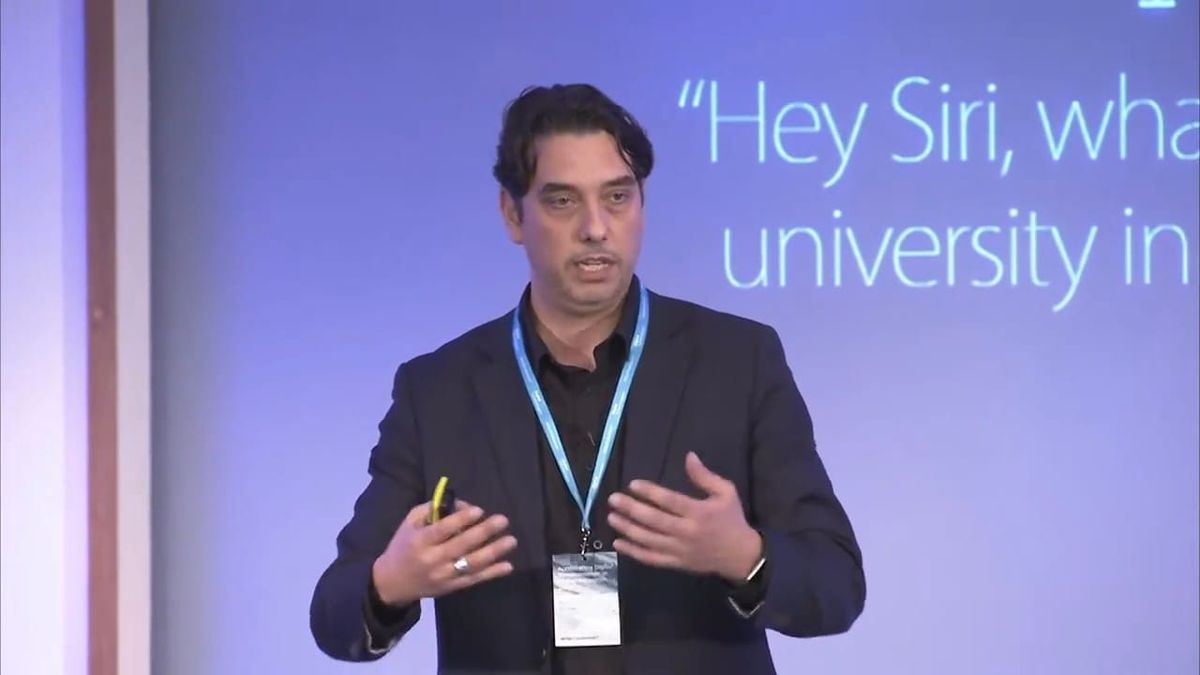
In 2017 I stood up at the University of London and told a room of higher education marketers that the search box was about to stop being a box. I have just watched the recording back. Some of it has aged well. Some of it has not, and the part I got wrong is the more useful half.
- I described what was coming as voice search, and I called it a component of what was then labelled cloud AI. The label was the fashion of 2017. The mechanism was right.
- I said this kind of search would replace typed search, that the language would be more natural and the query more semantic. That is now simply how people ask machines questions.
- I said agencies would have to switch how they think and switch what kind of content they show. That is the sentence that has aged best, and it is still the sentence most organisations have not acted on.
- What I got wrong was the vehicle. I expected the assistant in your pocket. What arrived was the assistant in your browser tab, reading and summarising published text rather than reading out a single spoken answer.
- The lesson is not that I saw it coming. It is that the shift was visible nine years early to anyone watching how a younger generation asked questions, and being early was worth nothing without published expertise for the machine to find.
What was I actually describing in 2017?
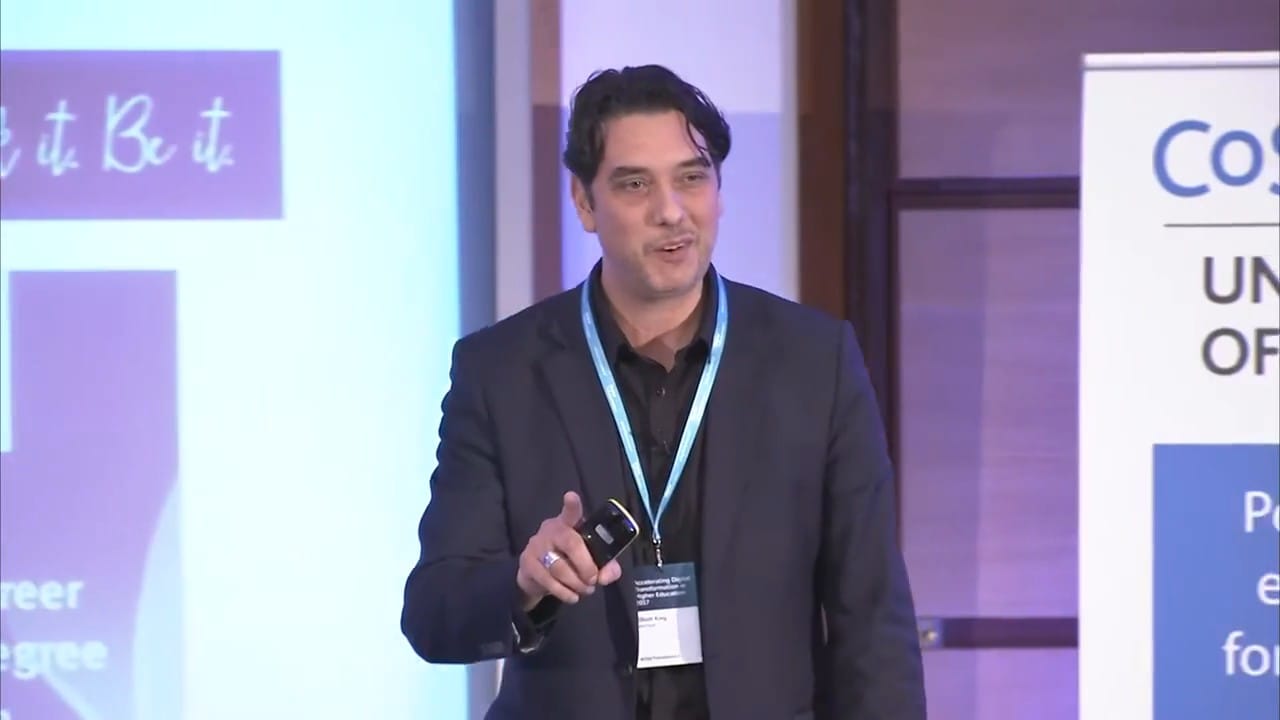
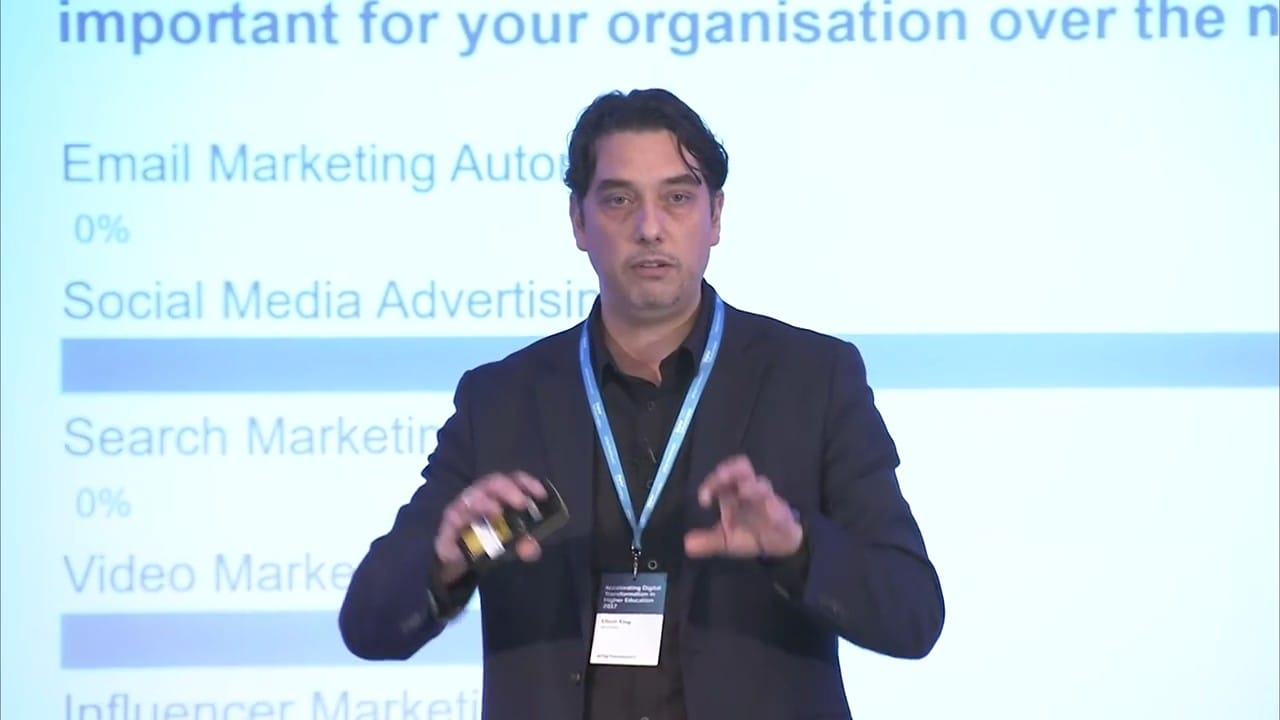
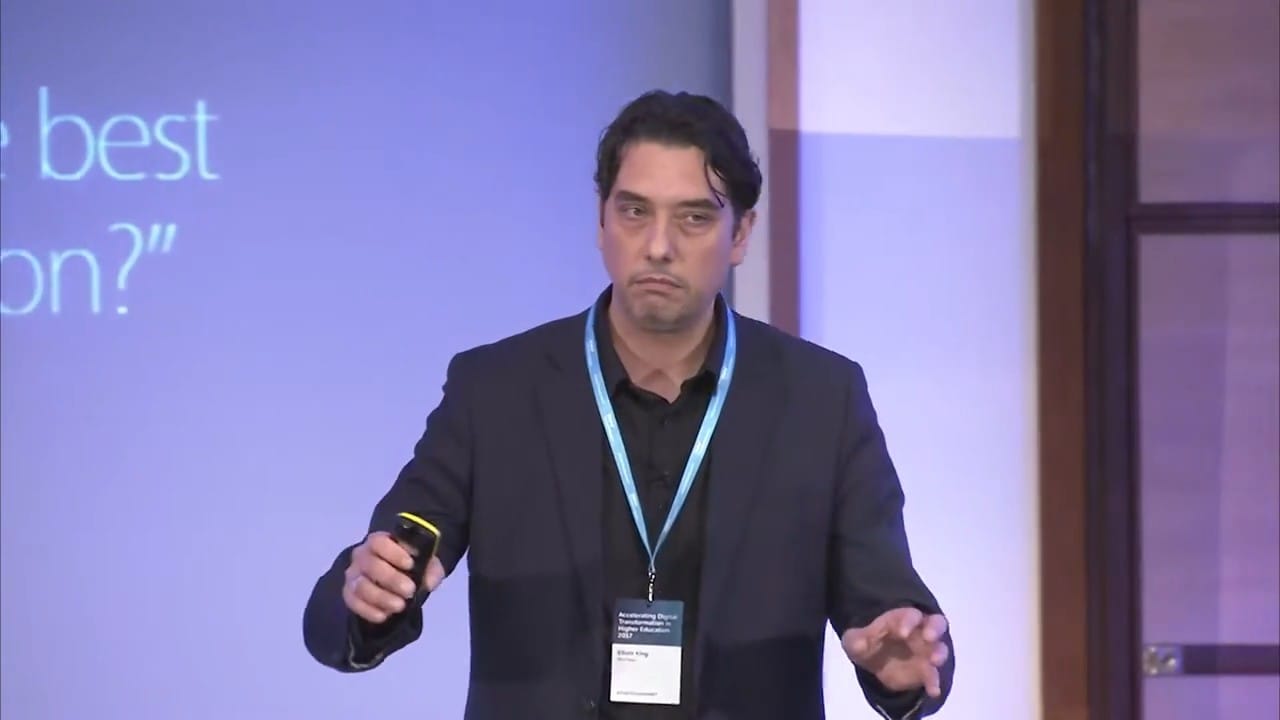
The talk was called Marketing for Gen Z: Reach, Engage and Inspire, delivered for MintTwist at the Accelerating Digital Transformation in Higher Education event hosted by the University of London. The audience ran student recruitment. My job was to tell them how sixteen and seventeen year olds were going to find them.
Partway through I put up a slide with a spoken question on it and asked for a show of hands. Who in this room uses voice search on their phone? The number that went up was higher than I was used to seeing. I said so at the time, because normally it was a minority of any room I stood in front of.
Then I made the argument. Voice search was a component of what the industry was then calling cloud AI. Here is how I put it on the day: "this thing about voice search which is actually a kind of a component of so-called cloud AI". The technology was sitting in the background, and the platform companies saw it as the future. That kind of search was going to replace the kind you type. The language would be more natural. The query would be more semantic.
I have been watching this particular curve for a long time. I got into computers pre-internet, when computers were not especially accessible, which means I have seen both the pre-internet and the post-internet version of this job. What I had noticed by 2017 was a pattern rather than a prediction: the behaviours a younger generation adopts first are the behaviours the technology companies build for, and those behaviours then arrive in the older age groups afterwards. Gen Z were not an exotic audience. They were the preview.
What did I get right?
Three things, and the third is the one that matters.
The mechanism. I said the query would become semantic and the language natural. Nobody types "best universities London 2026 ranking" at an assistant. They ask it what they would ask a knowledgeable friend, in a full sentence, with context attached, and they expect an answer rather than a list.
The replacement. I said this would replace typed search rather than sit alongside it as a novelty, in these words: "this type of search is going to replace the type of search that you might type into a search engine, whether you're on a laptop or even your mobile phone. And the search is more semantic, it's more natural, the language is more natural". That was not the consensus in 2017, when voice was mostly treated as a hands-free convenience for setting timers.
And the work. I said that once the flip happened there would be a serious job for agencies helping clients capture this kind of search, that we would have to switch the way we think, and switch what type of content we choose to show. The recording has me saying it plainly: "we're gonna have to … switch the way we think and we're gonna have to switch the way that we respond to a search like this and what type of content we want to show". That is the whole of the current discipline, stated nine years before anyone gave it a name. It is also, awkwardly, still a to-do list for most organisations rather than a finished piece of work.
What did I get wrong?
Here is the honest answer. I got the vehicle wrong.
I expected the assistant in your pocket to be the thing that changed search, because in 2017 that was the only machine anyone was talking to. I pictured someone asking a phone a question out loud and getting one spoken answer back. That did happen, and it turned out to be the less important half.
What actually arrived was the assistant in the browser tab. Not spoken, mostly typed. Not one answer read aloud, but a synthesised answer assembled from published sources, with the option to keep asking. The interface I expected was the voice. The interface that won was the conversation.
That distinction is not trivia, and it is not me marking my own homework generously. It changes the remedy completely. If the future were spoken answers, the work would have been schema, structured data and winning a single featured position. Because the future is a model reading and weighing published text, the work is the published text itself, and the authority behind it. Those are different jobs. One is technical. The other is editorial, and it takes years.
Why does the difference matter now?
Because it tells you what being early is worth. Nothing, on its own.
I described the shift accurately in 2017 and it made no practical difference, because a description is not an asset. An assistant answering a question in 2026 can only draw on what has actually been written down, indexed and recognised. If a specialist spent the last nine years knowing something and never publishing it, the machine has nothing of theirs to weigh, and the answer gets assembled from whoever did publish.
That is the uncomfortable symmetry. The organisations that are visible in AI answers now are not the ones that predicted AI. They are the ones that published consistently through the years when publishing felt like it was not working.
Notice what that rules out. It rules out catching up quickly. It rules out a clever technical fix bought in a quarter. It rules out treating this as a channel to be switched on.
What does this change about the work?
It moves the centre of gravity from optimisation to publication.
The technical floor still matters and you should get it right. A page a model cannot retrieve is a page that does not exist, and that is a solved problem with a known checklist. But the floor gets you considered, not chosen. What gets you cited is having said something specific, in public, under your own name, often enough that your name is attached to the subject.
There is a second thing I said in 2017 that I would now extend well past its original audience. I told that room Gen Z were drawn to authentic messages about people rather than to the brand label on top of them: "they want to connect with authentic messages, real messages and ideally messages that are about people". I framed it as a generational preference. It was not. It was an early sighting of how everyone would come to read content once there was too much of it to trust by default, and it is why a named expert saying something specific now outperforms a brand saying something general.
So the practical version is short. Publish what you actually know, under the names of the people who know it, in the places you own. Do it for longer than feels reasonable. That is the same advice I gave about brand equity as a moat, and the same argument Aleksandra and I make at greater length in Marketing Wins.
Where can you watch the original talk?
The full twenty minutes is on YouTube, and the original write-up of the event sits on this site as Marketing for Gen Z: Reach, Engage and Inspire. I covered neighbouring ground the same year in three key recommendations for marketing to Generation Z, filmed at BETT.
These days I spend my time on the other end of this argument. I am a Managing Partner in the Integrated Marketing division at FINN Partners and work as an AI visibility expert, which mostly means helping organisations publish the expertise they already have. I talked about why that matters on Talk Radio Europe, written up here as why a live conversation outranks generated copy. If this is on your roadmap, my door is open.
Frequently asked questions
How is AI search different from voice search?
Voice search changed the input. AI search changed the output. A voice query is still a query looking for a result, just spoken instead of typed. An AI answer is synthesised from multiple published sources and returned as prose, which means the competition is no longer for a position in a list but for inclusion in an answer. That is why the 2017 framing of this as a voice problem was incomplete, even though the underlying shift to natural, semantic questions was correct.
Does being early to a trend give an organisation an advantage?
Only if it published while it was early. Foresight that stays internal leaves no trace for a retrieval system to find, and an AI answer can only be assembled from what exists in public. The advantage belongs to whoever has the longest run of published, attributable expertise on a subject, which is usually not the same organisation that saw the change coming first.
What should an organisation do about AI search now?
Fix the technical floor so your pages can be retrieved, then treat the rest as a publishing problem rather than an optimisation one. Decide which people in the organisation genuinely know something, put their names on it, and publish consistently on a narrow set of subjects rather than broadly on many. Measure whether you appear in the answers your actual buyers are asking for, not whether you rank for a keyword.