By Elliott King
Published 26 September 2026
TL;DR
In March two thousand and seventeen I closed a seminar at BETT by telling a room of university leaders that they needed to be AI ready. Not mobile ready. AI ready. Nine years on, the part I described has arrived and the part nobody described is the part that is still broken.
- We do speak to machines now. That was the easy prediction, and it came true almost exactly as described.
- The hard problem was never the talking. It is that a machine which hears you perfectly still does not know where you are, what you were doing a minute ago, or why you are asking.
- Context is the last hard problem. Every assistant that frustrates you is failing at context, not at language.
- When it is solved, the interface between people and machines stops being a thing you go to and becomes something you live inside. I think that is worth a name: contextual living.
- And the key to it is not a bigger model. It is untangling, confirming and documenting what humans actually mean.

What did I tell a room of universities in 2017?
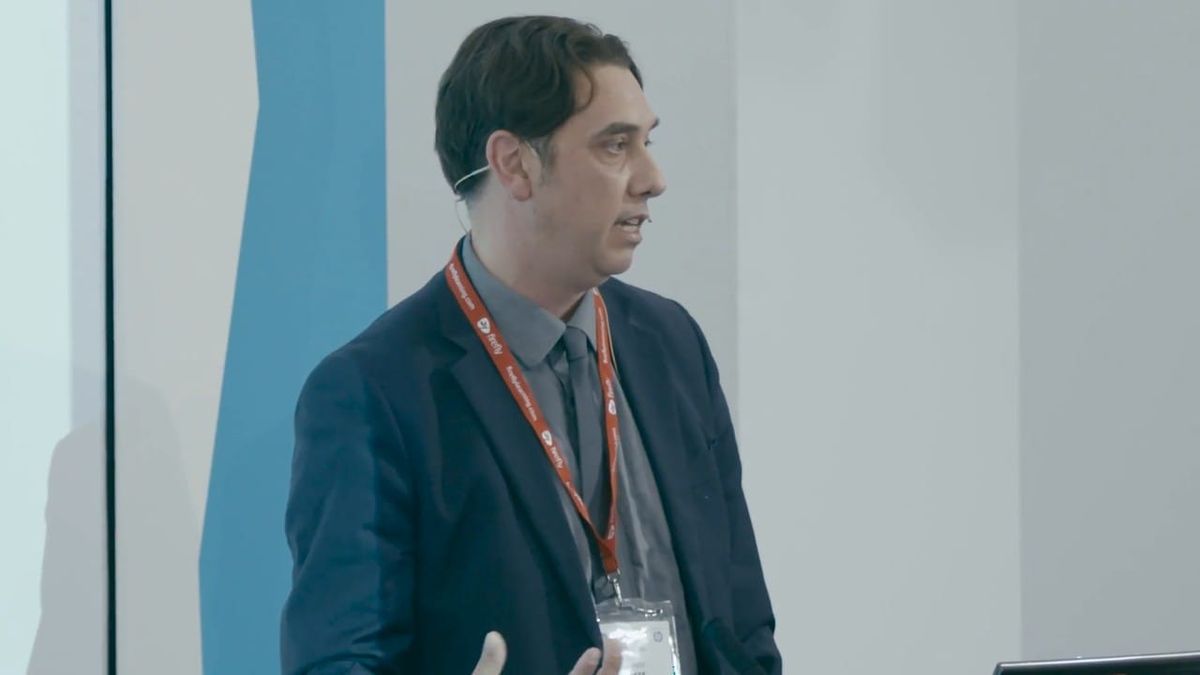
The seminar was a masterclass for senior leaders at the BETT Higher Education Conference, run on behalf of MintTwist. I opened it and closed it; my colleague Colin Cheng took the audience through what Generation Z were actually doing, and Ryan Taylor, then head of digital at City, University of London, showed what it looked like in practice. I want to be precise about that, because the good statistics in that room were Colin's, not mine.
My part was the framing at each end. To make the pace of change land, I asked them to picture a teenager from only ten years earlier.
"Let's talk about the seventeen year old from just ten years ago. The iPhone one had only just been invented, so let's talk about the pre-smartphone age. The average seventeen year old would have been waking up in his or her bedroom, running down to have breakfast, probably watching TV, possibly reading the back of the cereal pack, reading a free newspaper on the way, listening to the radio in the car."
Watch this moment, 25:53
Notice what every one of those has in common. Television at breakfast, a cereal packet, a free newspaper, the radio in the car. Each one happened in a particular place, at a time somebody else had chosen. Media was a set of appointments you kept.

Then the turn, and the takeaway I would still give today.
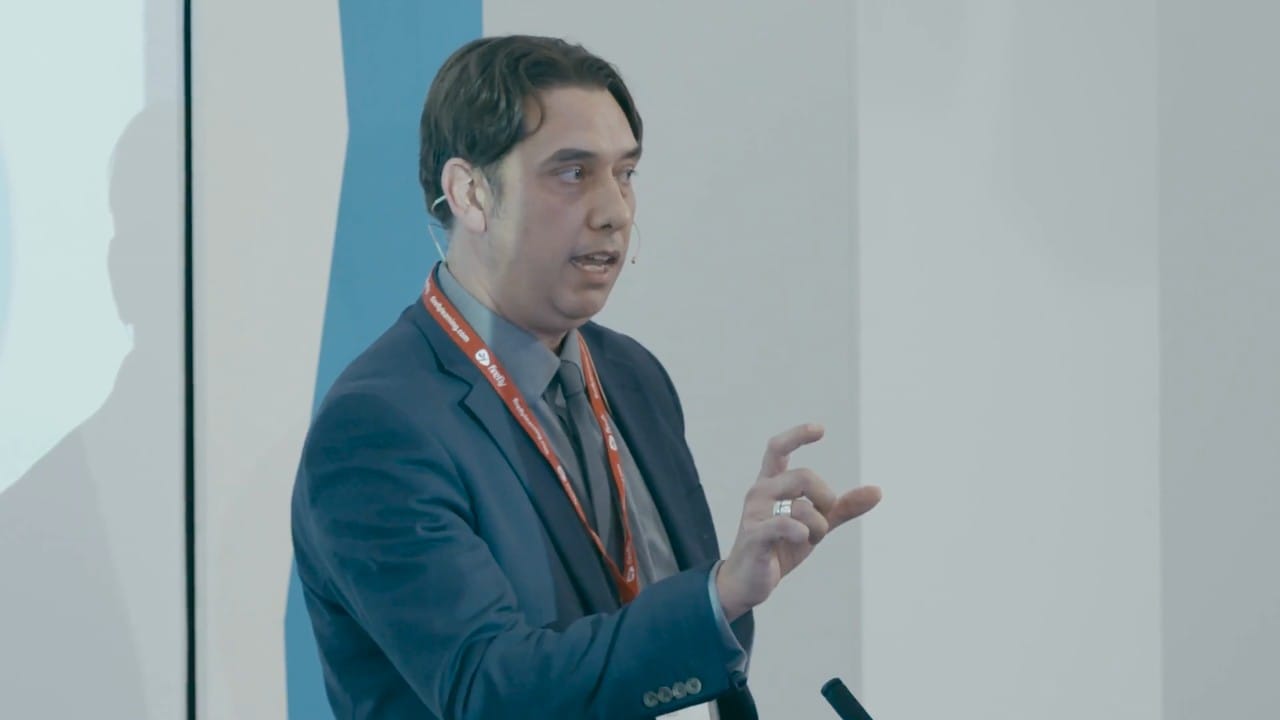
"They are probably connected to the internet in their sleep via their connected devices. The first thing most of them will do when they wake up is check their social media. We need to be AI ready. They are intelligent interfaces that allow us to speak to them and ask them questions in a semantic manner, and they will intelligently draw down answers to our questions. That is fundamentally different to typing a search into a search engine."
Watch this moment, 26:45
What has actually changed since then?
The mechanism arrived. People ask machines questions in ordinary sentences and get an answer rather than a list of links, which is precisely what that paragraph describes. I have written elsewhere about the search side of that, and about what survives when a platform shifts under you.
What did not arrive is the thing that would make any of it feel like intelligence. The assistant answers the question you asked. It has almost no idea why you asked it.
Why is context the thing that still breaks?
Try it. Ask the best model available where you should eat tonight and it will produce a confident, useless answer, because it does not know that you are in a strange city, that you have forty minutes, that you walked past two of its suggestions already, or that you cannot eat shellfish. Give it every one of those facts and the answer becomes excellent immediately.
So the deficiency is not reasoning. It is not language either. It is that the machine has no standing picture of your situation, and you are expected to reconstruct that picture by hand, in a text box, every single time.
That is the tax we are all quietly paying. Every prompt anybody writes is mostly context being typed out again.
What would contextual living actually look like?
Here is the turn I did not see in 2017, and the reason voice matters more now than it did then.
Voice on its own was a convenience: a hands-free way to set a timer. Voice joined to a model that can reason, carried on a device that can sense, is something else entirely. The device already knows where you are, what you are moving toward, what is in your calendar, what you said an hour ago and, increasingly, how you sound while saying it. Put those together and the machine stops needing to be told your situation, because it is already in it with you.
That is what I mean by contextual living. Not a smarter chatbot. An assistant that holds your context continuously, listens when you speak, senses when you do not, and reaches into whichever applications are needed to give you the thing you actually wanted, in the situation you are actually in.
The interface changes shape at that point. It stops being a destination you visit and becomes an ambient thing you talk to, the way you would talk to a good colleague who has been in the room all morning.
So what is the real unlock?
Not a larger model. We have watched three years of models getting larger and the context problem has not moved much.
The unlock is meaning. Untangling what a person actually means, confirming it rather than assuming it, and documenting it so it persists. That is the number one key to a workable human and machine future, and it is a harder and less glamorous problem than any of the benchmark races, because it is not really a machine problem at all. It is an editorial one.
Which is, I admit, a convenient conclusion for somebody who spends his days publishing verified human expertise. But I did not arrive at it from the business end. I arrived at it from watching machines do impressive things and still get people wrong, over and over, in the same way, for the same reason.
A machine that knows what you meant is worth more than a machine that knows everything. We are building the second one very fast and the first one hardly at all.
Where can you watch the seminar?
My write-up of the day is here on this site. If you want the other end of my own history with this, I published the story of watching an earlier platform shift break in I was in San Francisco when it broke.
I am a Managing Partner in the Integrated Marketing division at FINN Partners and I work as an AI visibility expert. Aleksandra and I set out the strategy groundwork in Marketing Wins. If any of this is on your roadmap, my door is open.
Frequently asked questions
What is contextual computing?
A system that holds a continuous picture of your situation, where you are, what you are doing, what you have just said and what you are trying to achieve, and uses it to act without being told each time. Today most assistants are context-free: they answer the sentence in front of them and forget the situation around it, so the person supplies the situation by hand at every turn.
Why do AI assistants still get simple requests wrong?
Because the failure is usually not comprehension. The model understands the words and lacks the circumstances: your location, your constraints, your history, your intent. Supply those explicitly and the same model answers well immediately, which is the clearest evidence that context, not capability, is the binding limit.
Will voice replace typing as the main way we use AI?
For anything situational, probably yes, because speaking is faster than typing and hands-free matters when you are moving. Typing will hold on wherever precision or privacy matters more than speed. The more interesting shift is not the input at all: it is that a system holding your context needs far less input of any kind.