By Elliott King
Published 26 September 2026
TL;DR
I was twenty-four, I quit a software job in London, and I flew to San Francisco in nineteen ninety nine to work on e-commerce start-ups. Then the whole thing fell over. Ten years ago I told that story at the Institute of Directors, and I have just gone back through the recording.
- The money was extraordinary and it was all ahead of the customers. That is the whole of the error, and it is the one being repeated right now with a different technology.
- Friends of mine in their twenties were paper millionaires on a Friday and on a plane home shortly afterwards. Nobody had done anything stupid. They had just been early.
- The companies that came out of it were not the boldest. They were the narrowest: one thing, done completely, for long enough to still be standing when the demand finally arrived.
- The lesson I took from Silicon Valley was not about vision. It was about how fast you are willing to find out that you were wrong.
What makes a twenty-four year old quit and fly to California?
Nothing sophisticated. I had been out of university a couple of years, I had done a couple of years at a software firm in London, and everything interesting appeared to be happening five thousand miles away. So I resigned and went.
San Francisco was not a handful of clever companies. It was an entire city that had already decided how the next decade was going to go.
"It was nineteen ninety nine in San Francisco, and you would drive anywhere in California and see huge billboards talking about gardening dot com, anything you like dot com. There were billions of dollars of investment going into these companies, and programmers like me were developing the infrastructure the investors believed would take all of retail commerce online almost overnight."
Watch this moment, 0:51
Read that back and the striking thing is not the billboards. It is the word overnight. Everybody involved, including me, was building for a change that was assumed to be weeks away.
What was the mistake everybody made?
It fits in one sentence, and it was said out loud, constantly, as though it were a strategy.
"There was so much competition for programmers that start-up companies were giving vested share options, so friends of mine in their twenties were literally paper millionaires. The concept was that if we build it, the consumers are going to come. But they were a bit too quick, because although the programmers in Silicon Valley were connected and using the internet, the wider world was not quite there yet."
Watch this moment, 1:55
Being too quick is not the same as being wrong, and that distinction is where all the money went. Retail did move online. It simply did not move in nineteen ninety nine, and an infrastructure bill does not wait politely for its market to show up.
What does it look like when it breaks?
Fast, and personally.
"Your company, or in this case an entire industry, went bust, and it was the dot com bubble bursting. I had many hundreds of friends working in that sector, literally paper millionaires one day, and almost the next day the companies had gone bust, the paper was worthless, and they were on the plane back home. But there were survivors, and there were companies that thrived out of the ashes."
Watch this moment, 2:50
I want to be careful about how I tell this part, because it is usually told as a morality tale about greed. That is not what I saw. I saw a lot of capable people who had read the direction of travel correctly and got the timing wrong, which is a different failure and a much easier one to repeat.
What did the survivors have in common?
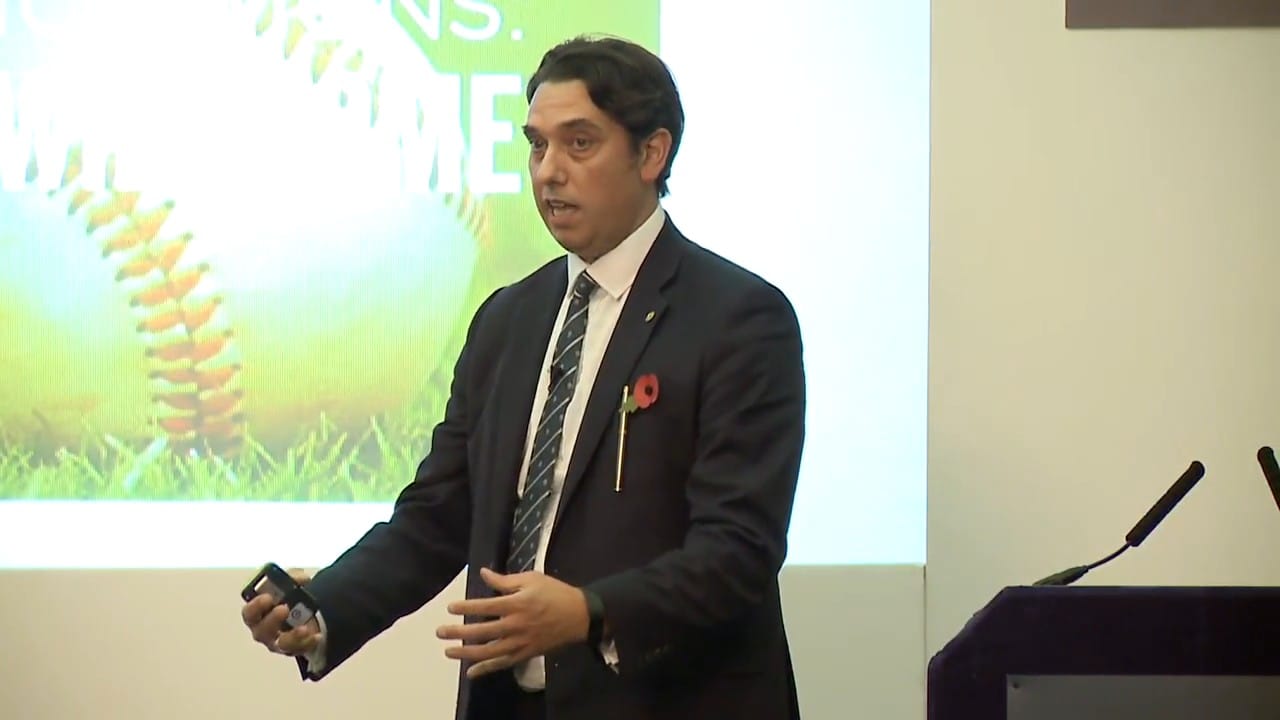
When I was in Silicon Valley, Google was an eight person company and Yahoo was the one that mattered. The established players all had search as a feature, alongside the news and the weather and the stock prices, because search was not the business, it was a component of a portal.
Google did one thing. An uncluttered page that did nothing but search, given to a technical audience who recommended it onward. Amazon did the same trick in a different market: one category, books, and an obsession with delivery and customer service, while the wider e-commerce industry was busy being everything at once.
That is the pattern and it is not a glamorous one. The survivors were narrow. They picked one thing that would still be true when the demand arrived, and they were still there when it did.
Why does a talk from two thousand and sixteen still matter?
Because I keep sitting in rooms where the nineteen ninety nine sentence gets said again with a different noun in it. The technology has changed. The shape of the error has not.
Here is the turn, though, and it is the reason I went back to the recording at all. In nineteen ninety nine the builders were early and the audience was late. Right now it is the other way round: people are already asking machines questions all day long, and most organisations have published almost nothing for those machines to find. Being early is not the risk this time. Being absent is.
I have made that argument at more length in what actually survives a platform shift, and on the radio in why a live conversation outranks generated copy.
What did I actually take away from it?
This, and I still think it is the most useful thing Silicon Valley taught anybody.
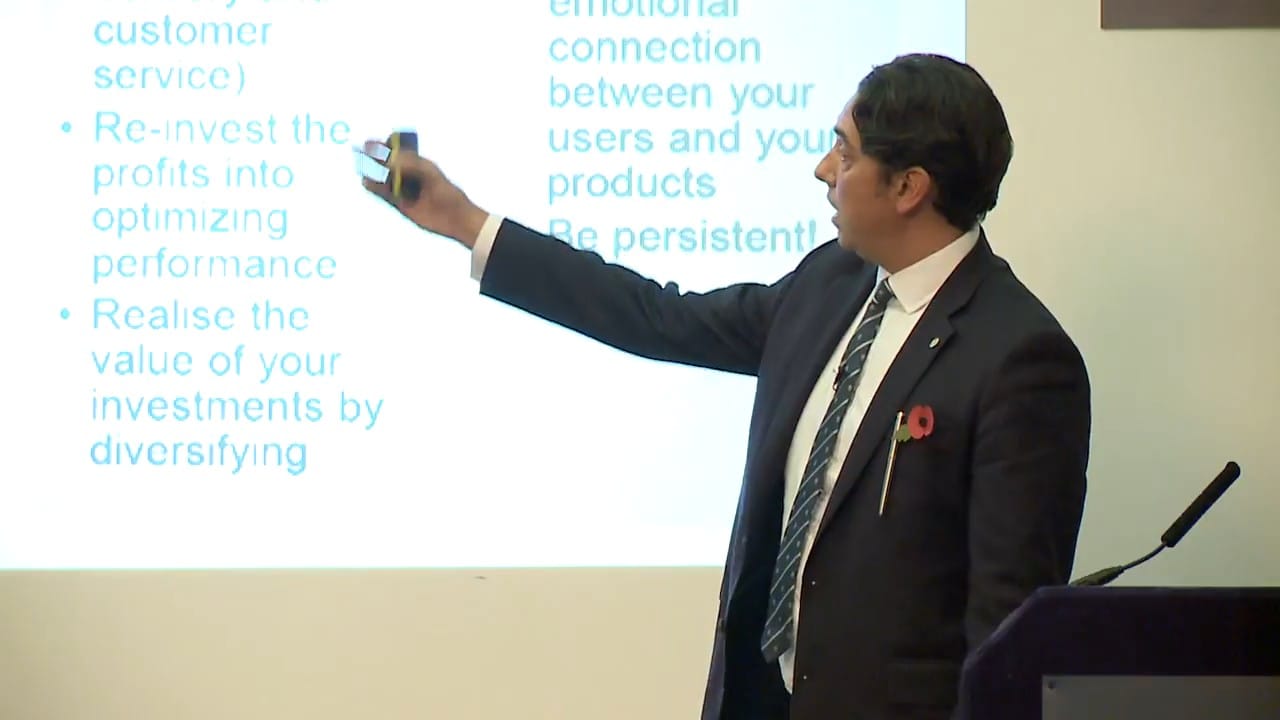
"One of the main things you need to do to take advantage of the digital age is to plan, but do it quickly. You need to differentiate. You need to be bold, and you need to be decisive and quick. The adage in Silicon Valley is that it does not matter if you fail, as long as you learn the lessons and adapt quickly."
Notice what that does not say. It does not say back yourself regardless. It says find out quickly, and be honest with yourself about what you find.
Where can you watch the whole thing?
The full fourteen minutes are above, and my write-up of the event itself, including the panel I chaired afterwards, is here. I am a Managing Partner in the Integrated Marketing division at FINN Partners and I work as an AI visibility expert. Aleksandra and I wrote the strategy version of all of this in Marketing Wins. If it is on your roadmap, my door is open.
Frequently asked questions
What caused the dot-com crash?
Money arrived years before customers did. E-commerce infrastructure was built at scale for a public that was not yet online in sufficient numbers, on the assumption that building it would bring them forward. When it did not, businesses with no revenue could not support the valuations placed on them, and the correction took the whole sector down with the genuinely weak companies.
Which companies survived the dot-com crash, and why?
The narrow ones. Google did search only, on a deliberately plain page, and won a technical audience that recommended it to everybody else. Amazon concentrated on one category and on delivery and customer service, which made it profitable there as soon as demand matured. Both widened later, from a position they already held rather than towards one they hoped for.
Is the AI moment the same as the dot-com bubble?
It is the mirror image. In nineteen ninety nine the infrastructure was ready and the audience was not, so the spending had nothing to serve. Now the audience is already asking machines questions every day and most organisations have published very little for those machines to draw on. The risk then was being too early. The risk now is being invisible.