By Elliott King
Published 22 August 2026
TL;DR
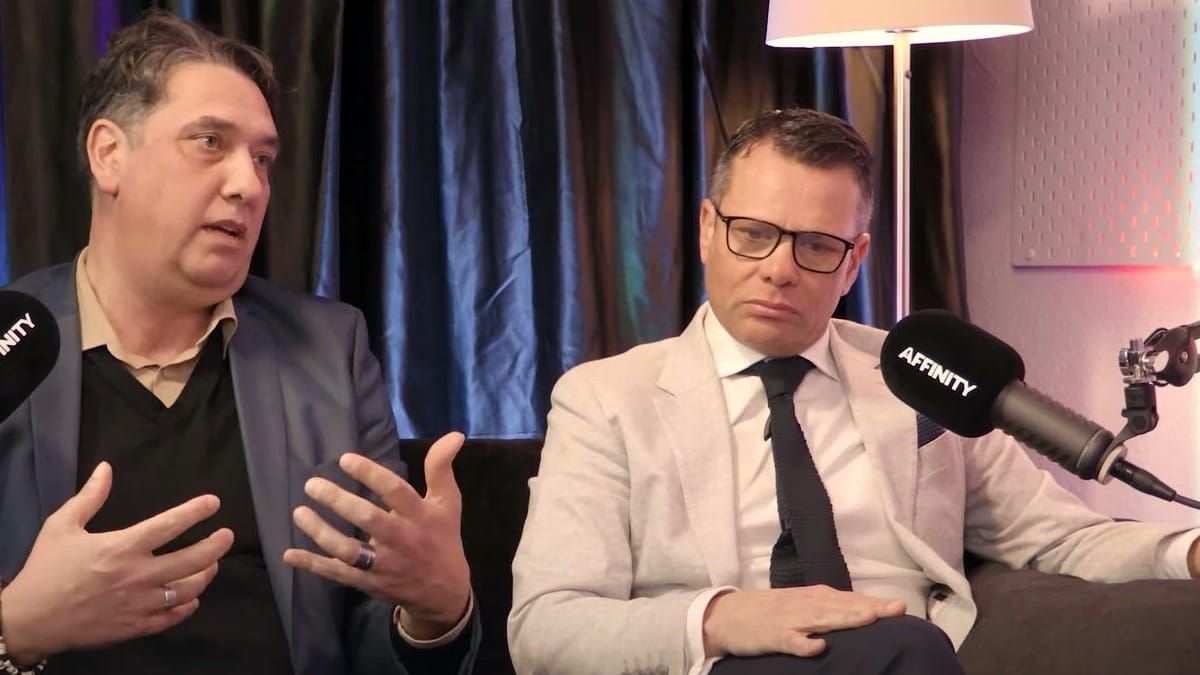
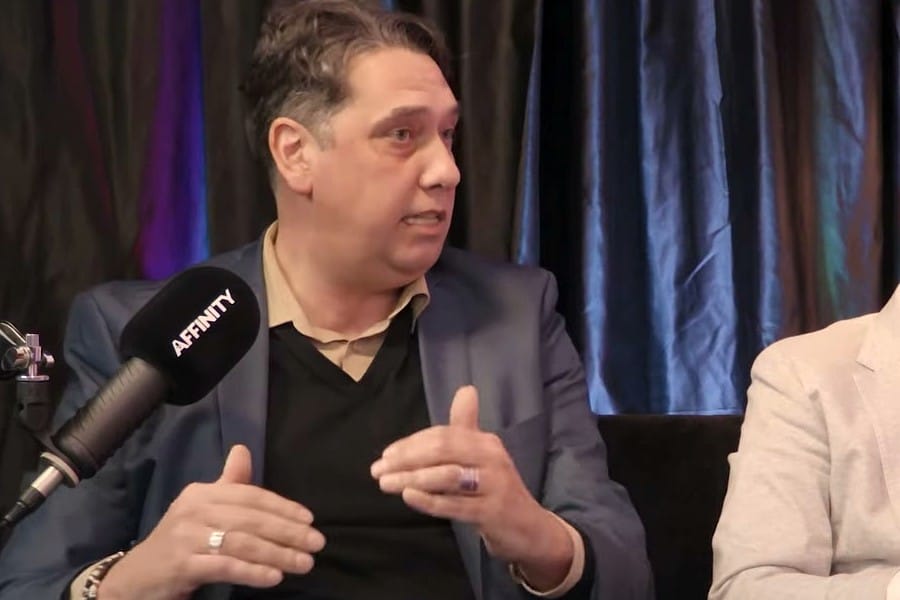
I've just spent an hour talking about brand value with one of the most precise clients I've ever worked with - Chris King, who runs all the commercial operations at Medite Smartply - on the Affinity Podcast, a show I co-produced for FINN Partners, hosted by Aleksandra King, a podcast host and my co-author on Marketing Wins. Here's what I took away, and why I think this kind of conversation is itself the point.
- In a commoditised market, brand isn't decoration - it's the mechanism that lets you charge that little bit more, protect your margin and keep your distributors winning.
- Chris calls it the "brand tax": one and a half to two per cent, certainly not ten - and at around 350 million euro of revenue, competing against five-to-seven-billion-euro rivals, increments of that size land directly on margin.
- The agency sector has almost become commoditised too - the differentiator is the value you layer on top of tactical delivery, to sharpen your client's thinking rather than simply execute it.
- Chris's brief to his agency - add value to my thinking - is the standard every agency should be held to, and every client should set.
- Long-form interview thought leadership is the most relevant marketing there is right now - an hour of a client and an agency thinking out loud in public is brand marketing, proof of expertise and verifiably human content all at once, and that's how organisations stay ahead in an AI world.
What does a 'brand tax' actually buy?
Chris's market is about as unforgiving as B2B gets. Timber is a globally traded commodity, and Medite Smartply - part of the forestry division in Ireland, with the Irish government as its ultimate parent, which makes it a semi-state organisation - manufactures highly engineered timber panels for construction and furniture customers across approximately twenty countries. It runs at around 350 million euro while competitors run at five, six, seven billion. And the pressure never lets up. As Chris put it: "Because of course our brilliant Brazilian competitors or our Chinese competitors or even some of the mainland European competitors. They turn up with today's price."
So what is the brand for, in a market like that? The sharpest answer to that question came from Chris: "to justify a brand tax as I call it. Now that might be one and a half percent. That might be two percent. It's certainly not ten percent". I love that framing because it's honest in both directions - it claims a real, bankable premium, and it refuses to inflate it. I said on the episode that "Medite is an absolute stand-out case study of the benefits of investing in your brand", and I meant it commercially, not politely: "the brand Medite is really strong and in a commoditized market having that powerful brand allows you to put on that little bit of price which goes a long way". The brand tax buys three things - it moves the conversation away from price, it gives the commercial team ground to stand on, and it protects margin in a market structurally designed to erode it.
What does it mean for customers to 'see us without being there'?
My favourite line of the whole episode is Chris's yardstick for brand presence: "We wanna make sure that our customers see us without being there." That's what earned visibility looks like - the work is felt in the market without the company having to point at it, and it's a far more demanding test than any share-of-voice report.
The structure underneath it matters. Around eighty per cent of Medite's business is carried by relationship, quality and technical leadership; marketing's job is to create pull-through on the twenty per cent where the company can genuinely stand out. And that pull is what makes the indirect side of the business work, which is a point I made on air because agencies forget it too often: "when we are going through resellers it's actually the power of the brand that enables those resellers and partners and distributors to also be successful". Brand pull isn't just for the brand owner - it makes the whole channel money.
It's also why the campaign we're building together excites me. We're working on personifying Medite's technical knowledge - decades of heritage carried by a character - to surface the expertise that currently sits inside people's heads, inside files and folders, inside infrastructure, so the market comes to Medite asking what to do next. When people arrive with that question, the pull is real and you can count it.
Why is the agency business itself commoditised?
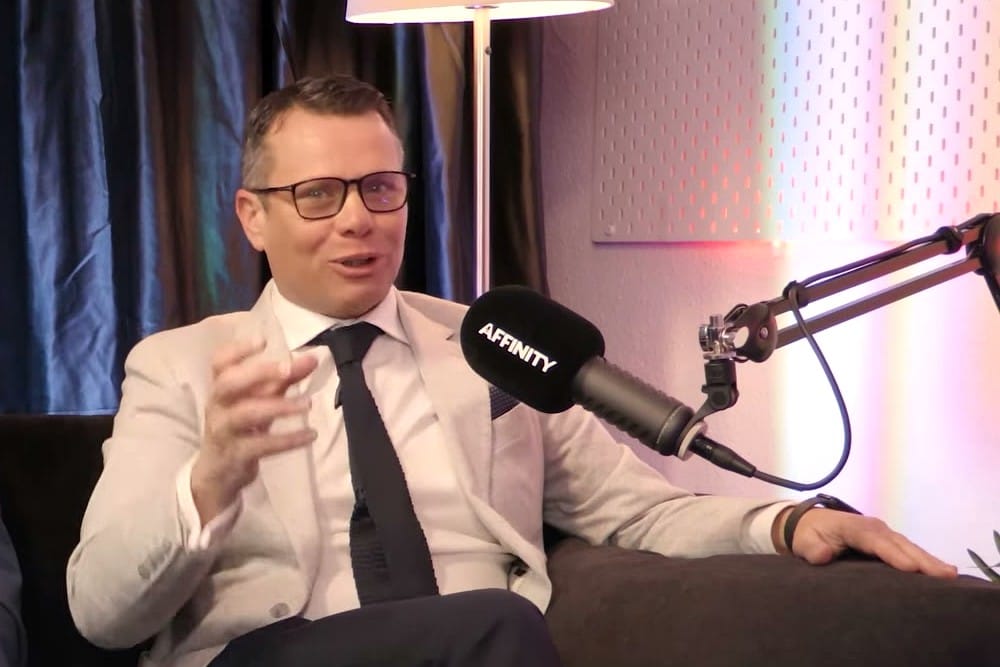
Here's the uncomfortable admission I offered on the episode: "to a certain extent for our own industry sector, meaning that the agency industry sector, those to a certain extent have almost become commoditized". Tactical competence - the social team, the designers, the planners - is table stakes now, and clients can buy it anywhere. The differentiator is the value you layer on top of those services, to change the shape of a client's thinking rather than just deliver against a brief.
Chris articulated the client's side of that bargain so well that I said so in the moment: "what Chris has just said there was gold to any agency". His standard: "my partner has got to add value to my thinking, I'm quite demanding in how good my thinking is". And Chris's corollary, which every agency should pin above the door: "the last thing that we look for is someone that gives us what we ask for. Because that assumes that we've got the right answer." I admire that enormously. Chris is demanding about his own thinking, demanding about ours, and generous with both - exactly the kind of client an agency does its best work for, because the bar is visible and the bar is high.
How do we stay nimble without losing the plan?
Practically, the delivery model is a rhythm. There's an annual plan at the top - the strategy for Medite's three divisions, the customer types, the routes to market, the messages - and then daily work in the channels underneath it, with our team liaising with Chris's in-house marketing team at least weekly, to tweak messaging and move budget while conditions are still moving. As I put it on the episode: "Chris's business has to react to the … market and therefore the marketing strategy has to be equally nimble and equally flexible".
The paid side makes the parallel with Chris's world almost poetic - buying Google or social ad space is itself a supply-and-demand marketplace, moderated by the quality and relevance of the ads, so our experts monitor the market and adjust almost daily, to optimise the cost per conversion rather than chase volume. And every agency office should hang up the measurement bar set by Chris: "I like three percent. I'm impressed by it, but I'm far more persuaded by something that I can … almost see on the P and L." Channel percentages are the instrument panel - the P&L is the destination, and a partner who accepts that discipline earns the right to be trusted with the strategy.
Why is this the most relevant marketing there is right now?
Here's my bigger belief, and this episode is the evidence for it: long-form interview thought leadership is the most relevant marketing there is right now, and the best way for an organisation to stay ahead in an AI world. An hour of a client and an agency thinking out loud in public is three assets at once - it's brand marketing, it's proof of expertise, and it's verifiably human content in a landscape filling up with the synthetic kind. Nobody can fake the way Chris reasons about a brand tax, a funnel or a forestry cycle, and that's exactly why it's worth publishing.
It works for every party in the room, too: the guest demonstrates technical leadership to his market, the agency demonstrates its thinking to future clients, and the show builds brand equity for its producer - value to customers, prospects and peers alike, especially when you nurture it through content re-marketing (just like this). Aleksandra and I make the longer version of this argument in Marketing Wins, and Chris closed the episode with advice that deserves the last word: understand the areas you can influence, understand the business and the competitive landscape, and find good people to work with. In an AI world, the organisations that stay visible will be the ones whose expertise is out in public, indexed and recognised - so sit down, press record and start thinking out loud.
Where can you listen?
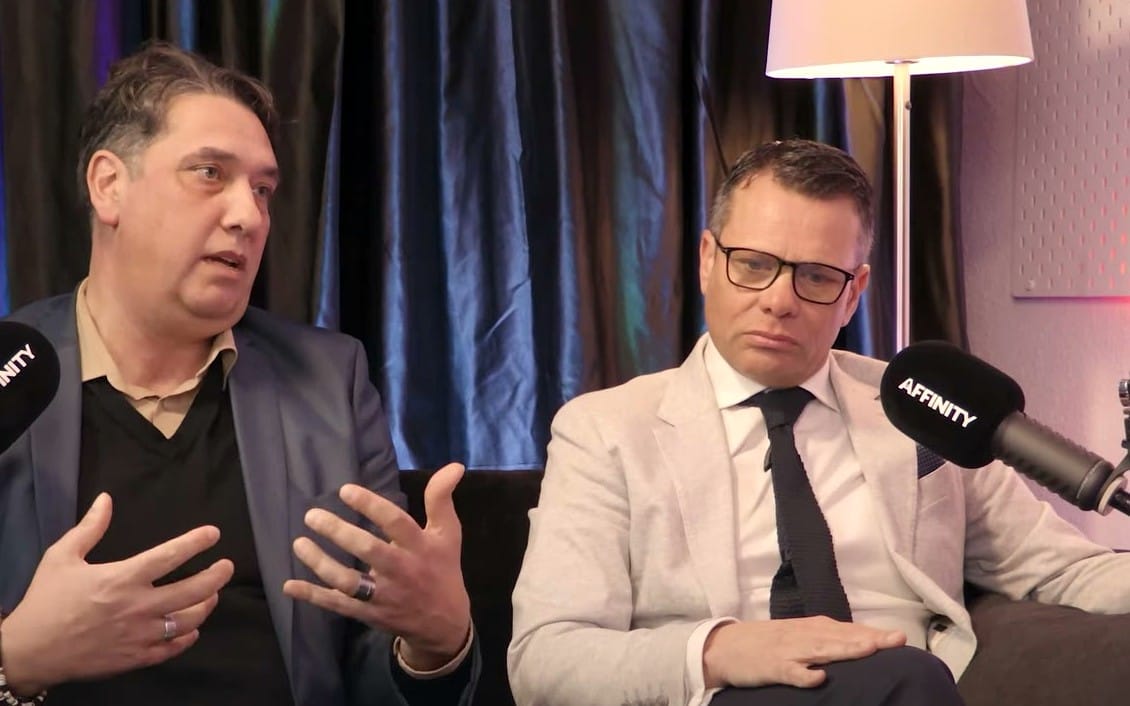
Watch "Branching Out: Building Brand Value in Price-Sensitive Industries" on YouTube, or find the episode notes on the FINN Partners episode page. FINN has been working with Chris and the Medite team for just under a year, and this conversation is a fair picture of what that partnership sounds like from the inside. I've written about the guest side of the microphone too, and about why AI ranks a live conversation above generated copy. If any of this is on your roadmap, my door's open.
Frequently asked questions
What is a "brand tax"?
It's Chris King's coinage for the modest premium a strong brand can justify over the commodity price - one and a half to two per cent in his market, certainly not ten. I rate it as the most honest sizing of brand value I've heard, because it's large enough to matter on the P&L and modest enough for a commercial team to believe in and defend.
Is brand investment worth it in a price-sensitive industry?
Yes - provided it's understood as a commercial instrument, to move conversations away from price and create pull through the channel. The premium is modest and continuously contested, because competitors arrive every day with today's price, and even a genuinely better story defaults to the base product without brand pull behind it. That's precisely why the brands that do invest stand out so clearly.
Why does long-form podcast content matter in an AI world?
Because it's brand marketing, proof of expertise and verifiably human content all at once. As synthetic content floods every channel, an hour of two practitioners reasoning together in public is evidence no model can fake - and it's exactly the kind of source that people, and increasingly AI systems, look to when they decide who the experts are. That's my day job as an AI visibility expert, and it's why I keep making shows like this one.