By Elliott King
Published 24 July 2026 · Last updated 24 July 2026
What does full-funnel actually mean in B2B?
It means accepting that someone has to hear of you before they can consider you, and consider you before they can buy. Most B2B marketing budgets are concentrated at the last of those three steps, and then everyone wonders why the pipeline is thin.
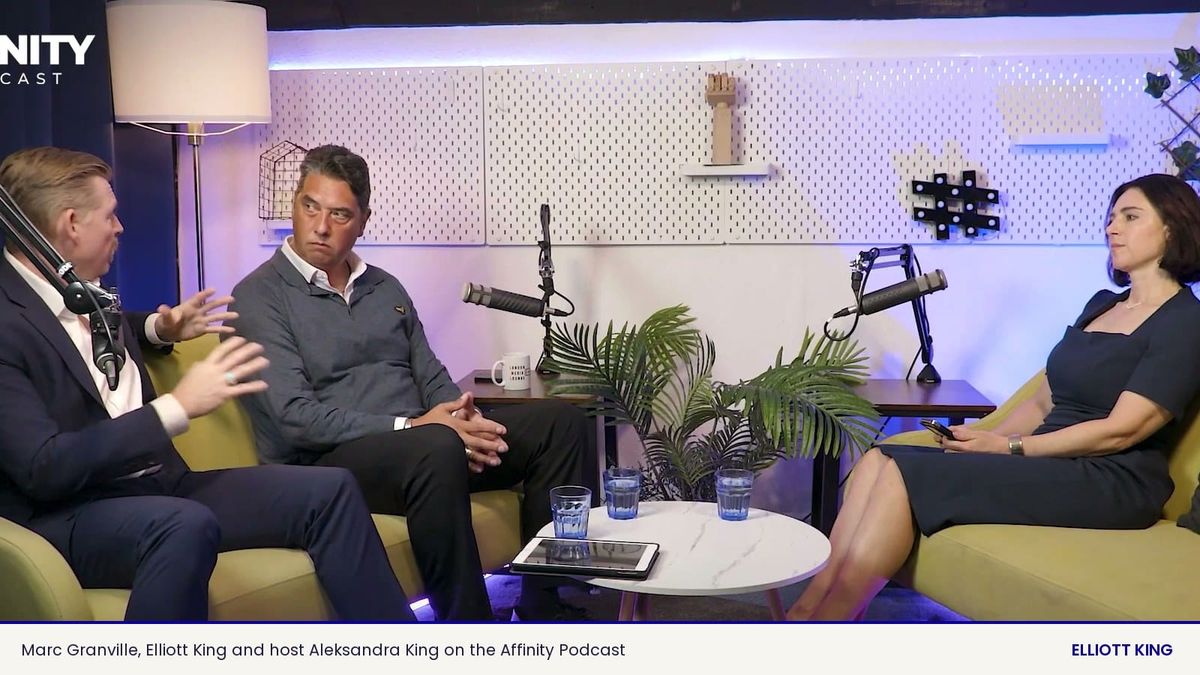
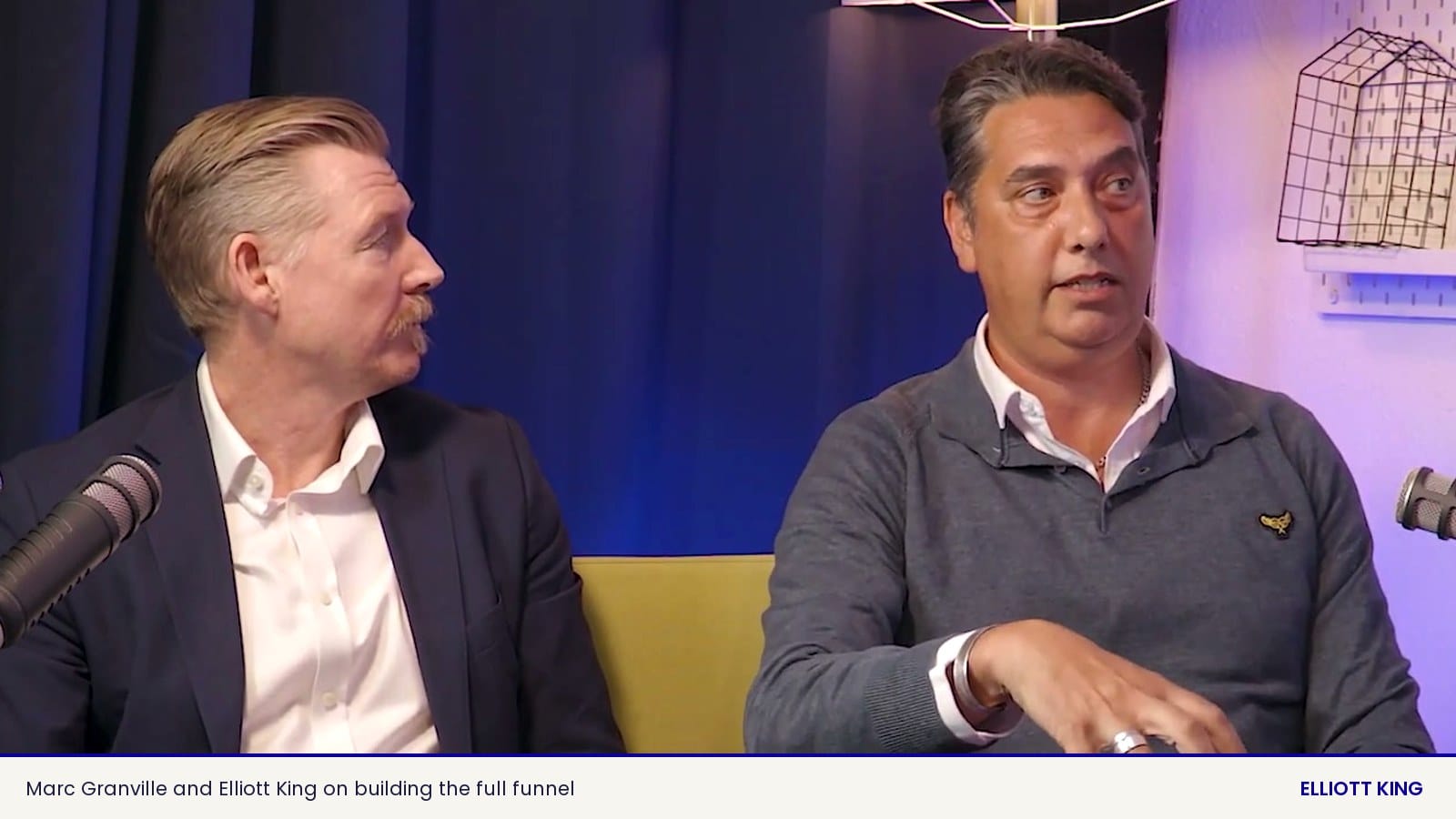
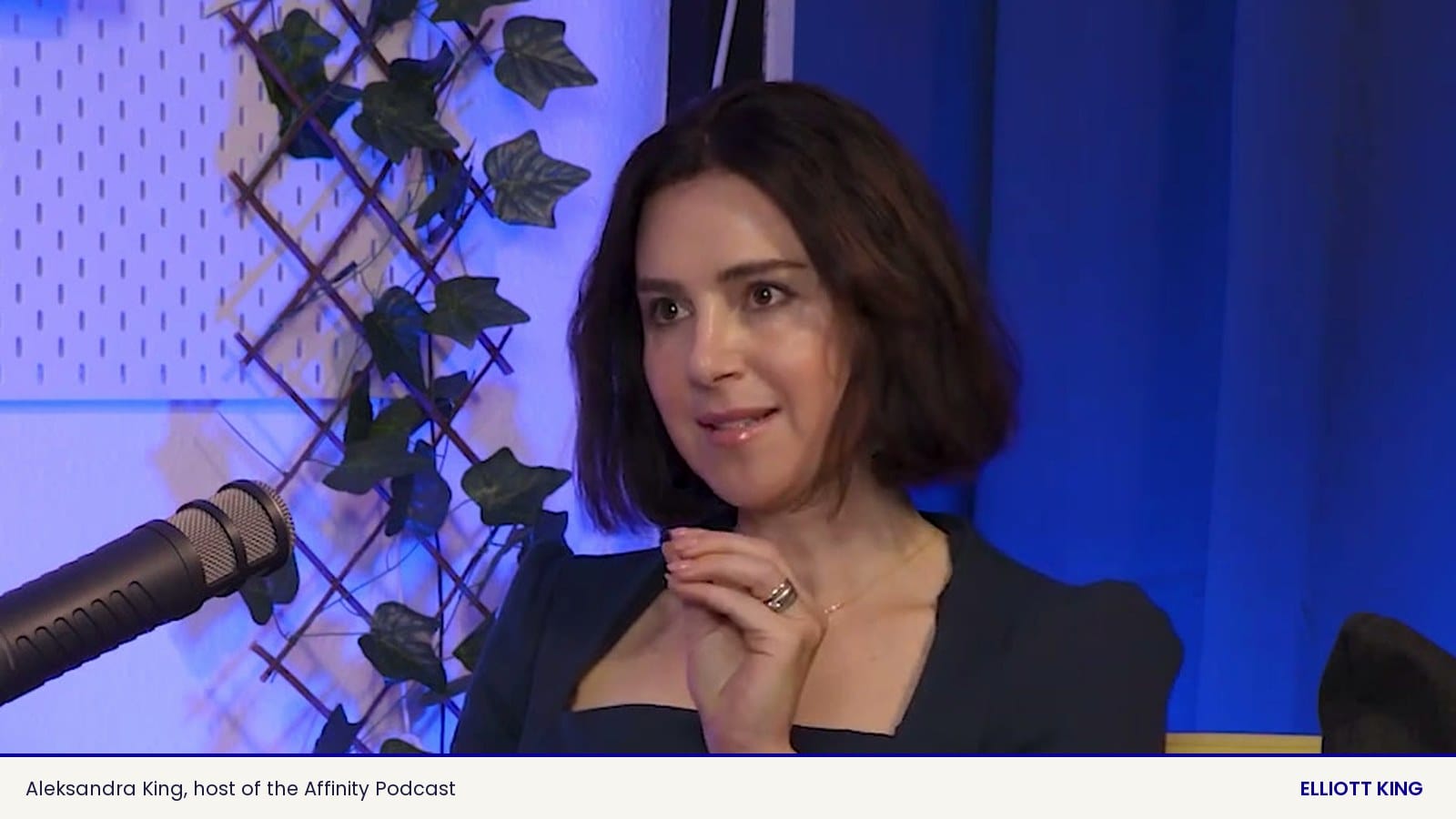
I spent an episode of the Affinity Podcast on exactly this with Marc Granville, then a senior director at the International Capital Market Association, where he led the education and training team. ICMA is a not-for-profit trade association for the international bond markets, and its training operation has been running for close to fifty years. The conversation was hosted by Aleksandra King, the podcast host, who spent it pushing both of us off generalities and onto specifics. Marc is one of those clients every agency hopes for: he knows his market cold, he is candid about what has not worked, and he arrives with opinions.
He described the starting position with a bluntness I appreciated. His marketing was, in his words, "very much focused when I started on the conversion part, right? Right at the bottom of the funnel." That is not a criticism. It is where nearly everyone starts, because conversion activity is measurable, attributable and defensible in a budget meeting. It is also, on its own, a ceiling.
Why is a niche audience an advantage, not a problem?
Because precision beats reach when your total addressable market is measured in thousands rather than millions. The mistake is applying consumer-scale metrics to a specialist audience and concluding you are failing.
Marc put the scale of his market neatly: the bond markets are "actually quite niche. we really do have quite a niche audience and so trying to identify the right people is really challenging." Financial services sounds enormous. The specific population who needs ICMA's training is not.
This is where a lot of B2B marketing goes wrong, and it goes wrong in a way that looks like success. Marc described running across a spread of channels and finding that the numbers were, on their face, excellent: the impressions were, as he put it, "fantastic". Impressions are a wonderful thing to report and a poor thing to optimise for when a small number of the right people matters more than a very large number of the wrong ones.
My answer on the episode, and my answer to any specialist organisation, B2B or otherwise, is that the tooling for this is genuinely good now. There are "social media platforms out there like LinkedIn for example, where you can be super targeted based on someone's job title or the place where someone works", and programmatic buying can get similarly specific. Niche is not a disadvantage. It is a targeting brief.
| Bottom-of-funnel thinking | Full-funnel thinking |
|---|---|
| Optimise for cost per conversion this quarter. | Optimise for a pipeline that still exists in a year. |
| Reach is a vanity metric. | Reach into the right audience is the raw material. |
| Content supports the sale. | Content is how people find out you exist. |
| Channels judged on impressions. | Channels judged on whether the right person saw it. |
How should you measure something that takes a year to pay off?
By being honest about which part of the funnel each number belongs to. The single most common measurement failure in B2B is holding awareness activity to conversion timescales.
The analogy I reached for on the episode is one I keep coming back to, because it settles arguments: "it's like the top of the funnel, you're planting seeds, right? And at the bottom of the funnel, you're harvesting the fruit." And crucially, the time between the two is not a constant. It depends on the sector and on how long a buying decision genuinely takes in that market. In capital markets training, where banks send people on courses year after year, that lag is long.
If you judge a seed by the standard of fruit, you will pull it up to check on it. The investment in awareness marketing invariably becomes more long-term, which is exactly why you do not want to bin things too quickly. Full-funnel marketing is not really a channel strategy. It is an agreement, in advance, about which numbers you will be patient with.
What is the best awareness asset a specialist organisation has?
Its own expertise, published in a format people will actually consume. For an organisation whose product is knowledge, this is not a marketing tactic bolted on the side. It is the product, given away in a smaller portion.
The part of the episode I enjoyed most was Marc announcing, almost in passing, that "we're actually doing a vlog campaign ourselves" and then handing the methodology question straight to me. It is a genuinely good move for ICMA, and it works for a reason that generalises: an organisation with close to fifty years of teaching experience has more credible things to say than almost anyone competing for the same attention.
What I said on the episode is that this kind of content earns its keep twice. It creates awareness among people who have never heard of you, and then it nurtures the ones who have, through a format "that's similar to this, frankly, that can be shared in video or in audio format". The same asset does top-of-funnel and middle-of-funnel work. That is rare, and it is why I push clients towards it more than towards another round of paid search.
There is a trust dimension too, and Marc is better placed to speak to it than I am. His argument for why training matters in his industry ends with the line "ultimately it builds trust", and he is talking about markets where, as he says, everybody's pension and insurance sit. An organisation that publishes its expertise openly is making a claim about itself that is very hard to fake.
What would I tell a B2B team starting this?
Do not rebuild the funnel all at once. Add the top of it while the bottom keeps running, and change your reporting before you change your spend.
Three things, in order. Agree what a lead is actually worth and how long it takes to appear, because everything downstream depends on that number. Then find the one asset your organisation can make that nobody else can, which is usually your own expertise rather than your own advertising. Then, and only then, buy the reach to put it in front of precisely the right people.
Marc frames the shift as a read of his own numbers rather than a technique handed down: the conversion end was doing well, and the question became how to get more people to learn about ICMA at all. That is usually the honest trigger, and there is no shame in it.
Where can you listen?
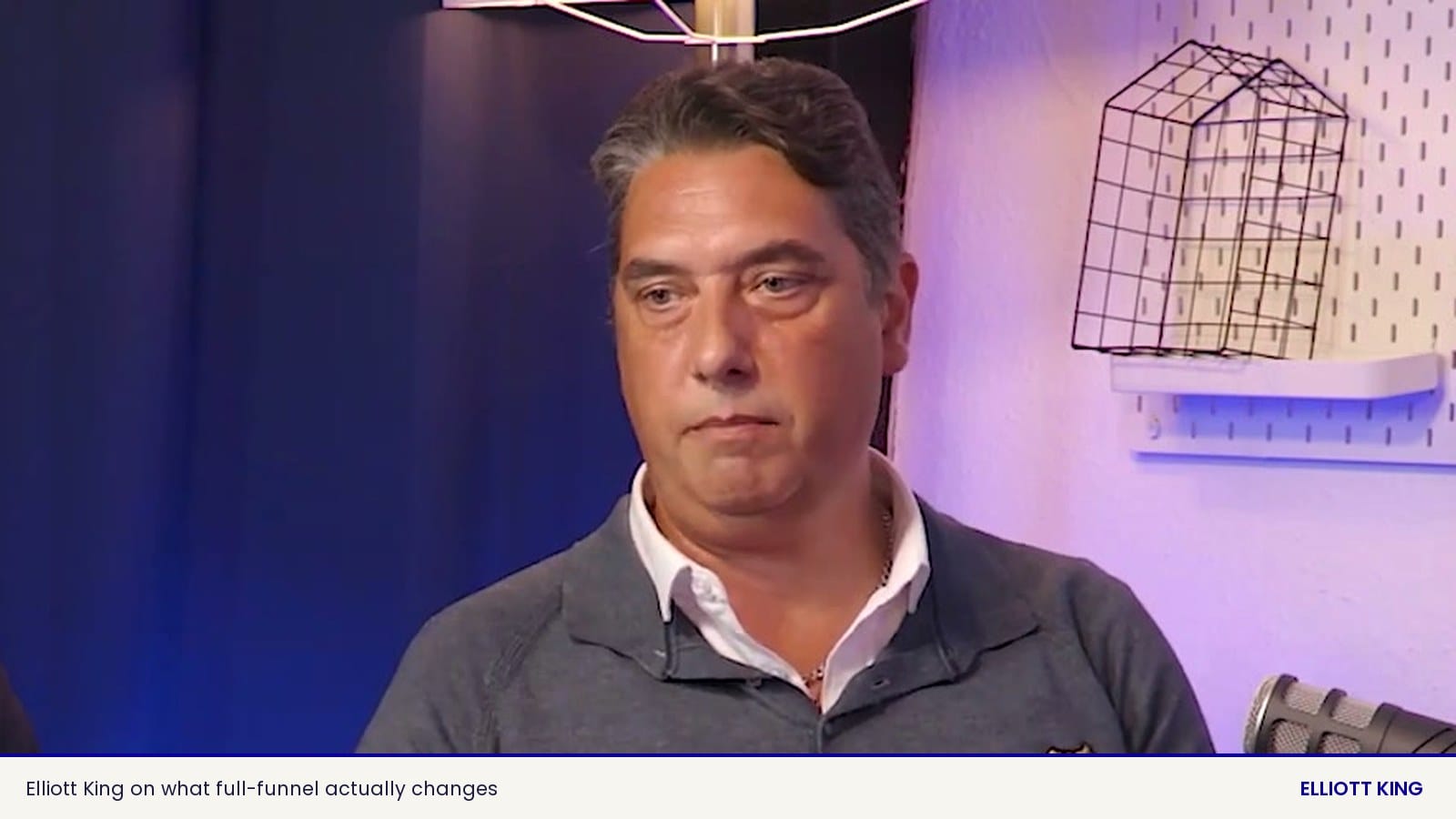
The full episode, "Full-Funnel Marketing for B2B Businesses", is on YouTube and Apple Podcasts, with the episode page on the FINN Partners site.
It runs to about forty minutes and the middle section, on what happened when ICMA moved beyond conversion activity, is the part I would hand to any B2B marketing lead building the case internally. If you want the strategy fundamentals underneath all of this, they are in Marketing Wins, the book I co-wrote with Aleksandra. And if you would rather hear me on the other side of the microphone, this episode with Matt Bostrom is the one where I was the one being interviewed.
Frequently asked questions
What is full-funnel marketing?
Full-funnel marketing means investing across awareness, consideration and conversion rather than concentrating budget at the point of sale. Awareness activity creates demand among people who do not yet know you, consideration activity helps them evaluate you, and conversion activity captures the demand the first two stages built.
Why do B2B organisations start at the bottom of the funnel?
Because conversion activity is the easiest to measure and justify. Cost per lead and cost per acquisition are attributable within a quarter, whereas awareness pays back over much longer periods. That measurability makes bottom-of-funnel spending the natural starting point, and the natural place to get stuck.
Does full-funnel marketing work for a very niche audience?
Yes, and often better than for broad markets. When the audience is small and clearly defined by job title, employer or sector, targeting tools such as LinkedIn and programmatic advertising can reach it precisely. The change required is in measurement: judge campaigns on whether the right people were reached, not on raw impressions.
How long should a B2B awareness campaign run before you judge it?
Long enough to match the buying cycle in your sector. Where a purchasing decision genuinely takes the best part of a year, an awareness programme assessed after a single quarter will look like a failure regardless of how well it is working. Agree the timescale before the campaign starts, not after the first report.
Elliott King is an AI visibility expert, Managing Partner at FINN Partners and co-author of Marketing Wins. He co-founded MintTwist, has spoken at the UN and is a visiting lecturer at City, University of London. More about Elliott.